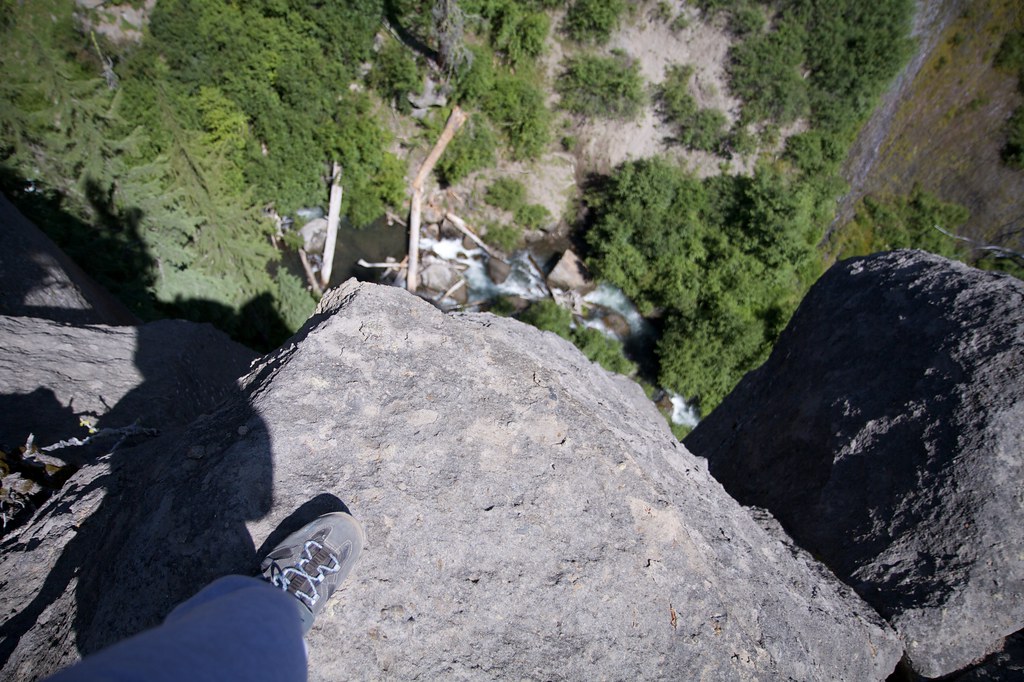
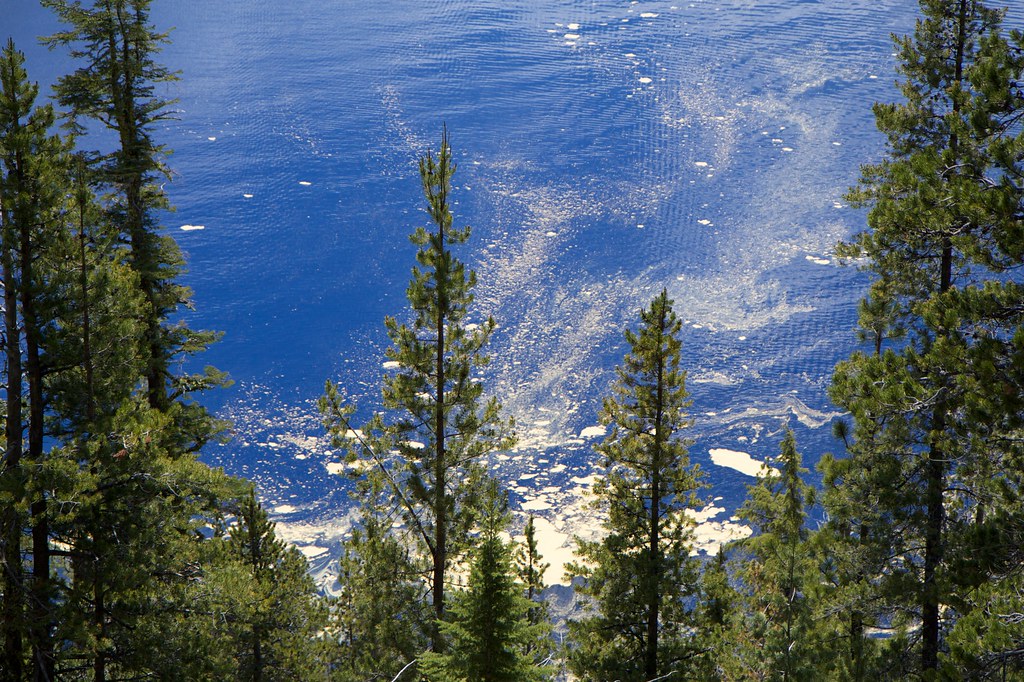
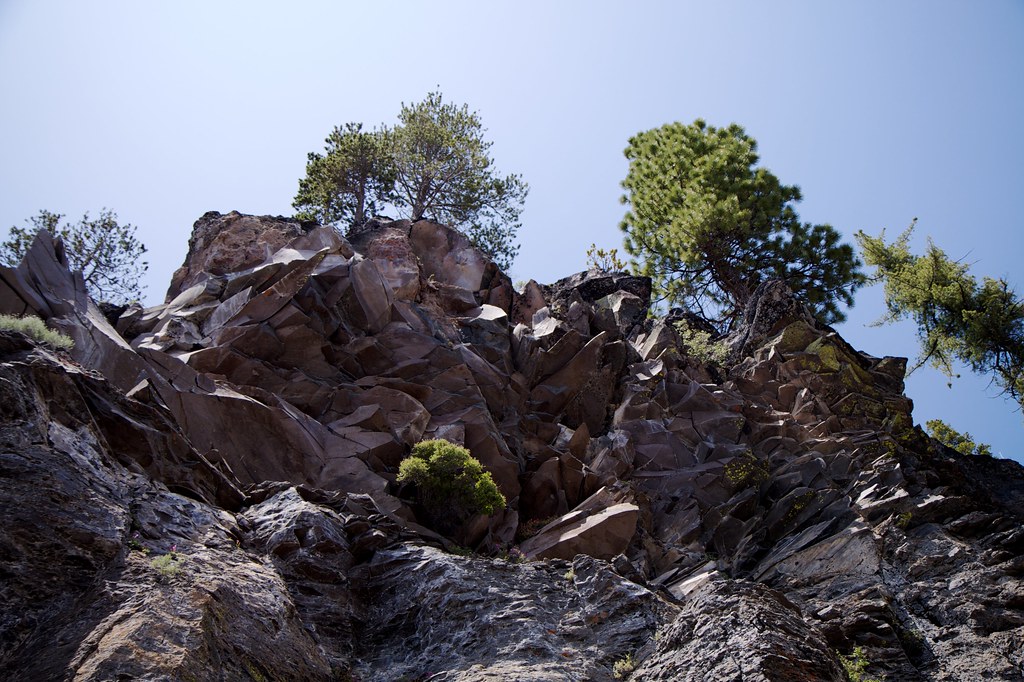
I’m on my way down from Crater Lake, and have stopped at one of the scenic turnouts to adjust my luggage. Afterwards I stretch my legs a bit, walking around with the camera, and end up looking down the edge of a cliff at a rushing river.
You know how it is. The very fact that something’s got an edge compels people to look over it.
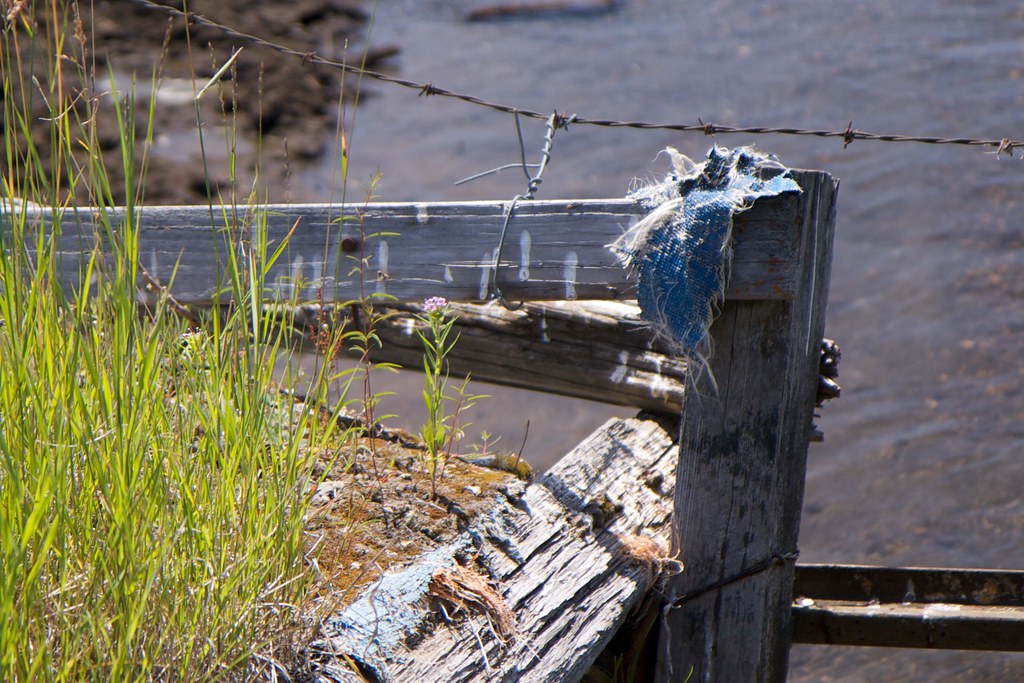
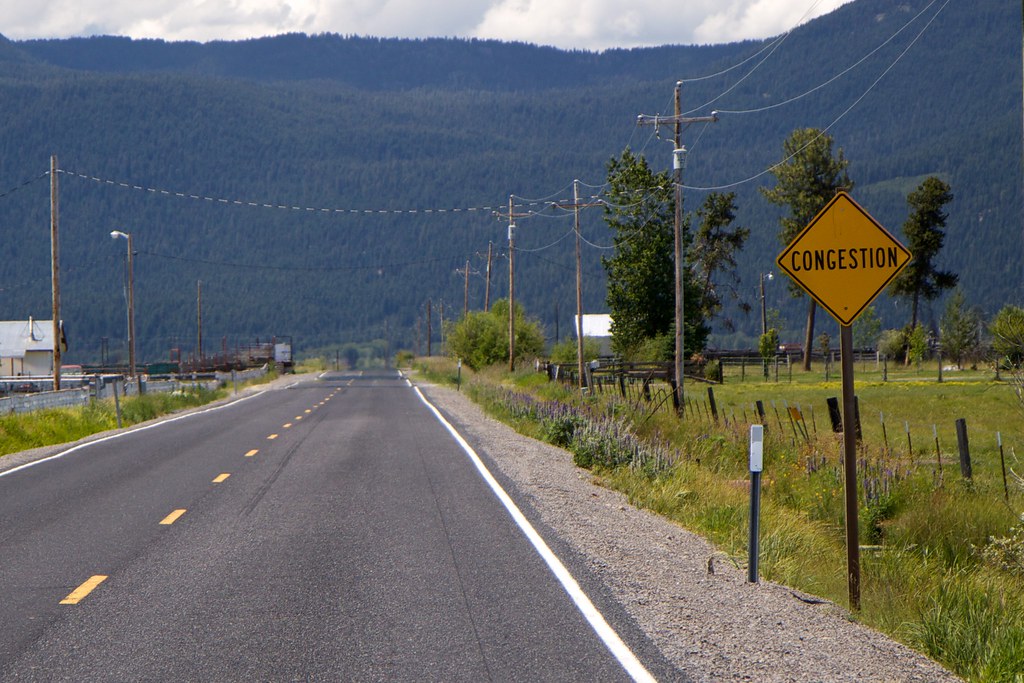
Later on, I’m cycling across the wide valley surrounding Fort Klamath, and this piece of cloth catches my eye. How did it end up stuck to a post over a ditch on the side of the road? Did some farmer lose a scrap of his pants while wiring the fence?
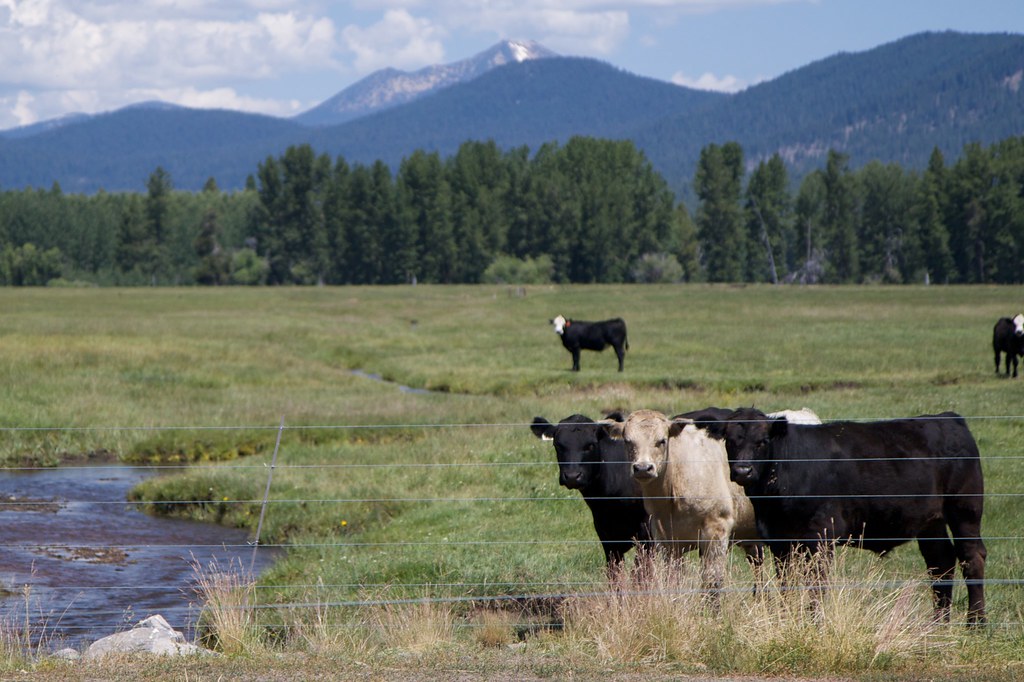
I don’t think so, Oregon farmers. Congestion is what you get when you’re driving over Highway 17 into San Jose at 9:00am on Monday morning. Cows crossing the road? A tractor blocking a lane? That’s just an excuse to stop and have a picnic.
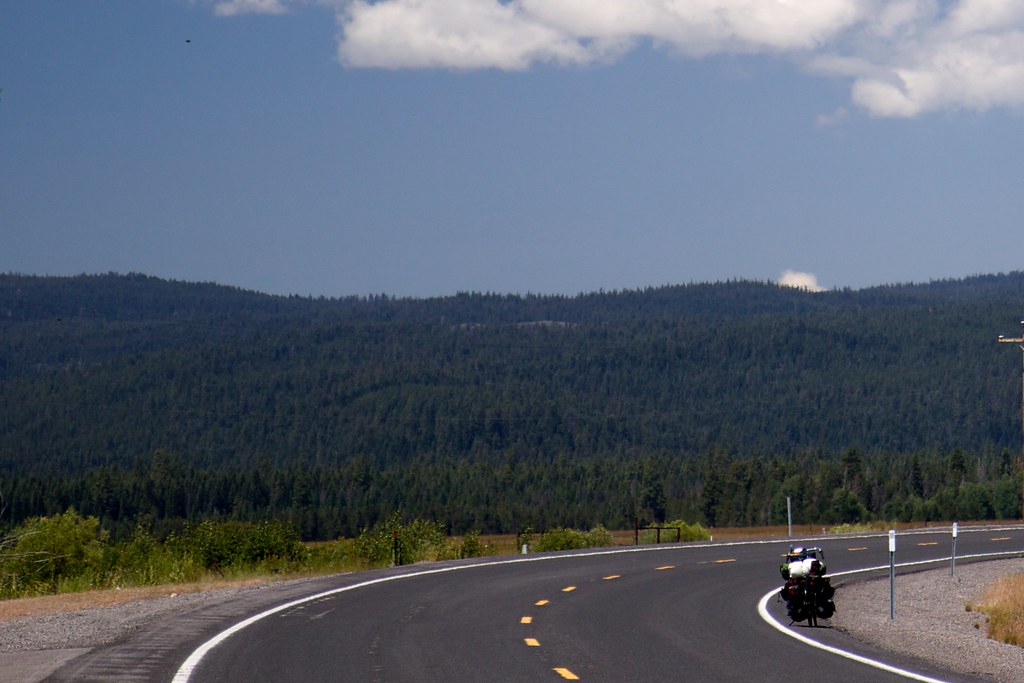
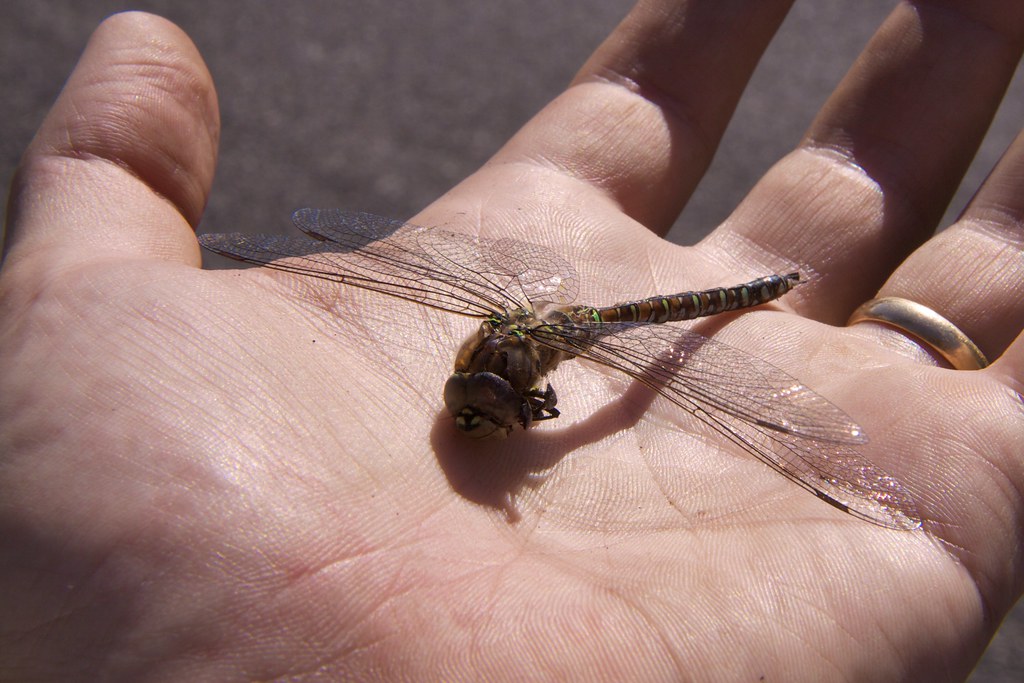
About three hours later I climb out of the valley, heading southwest, and during one of my frequent breaks to guzzle water or sip my root beer, I find this specimen in the road:
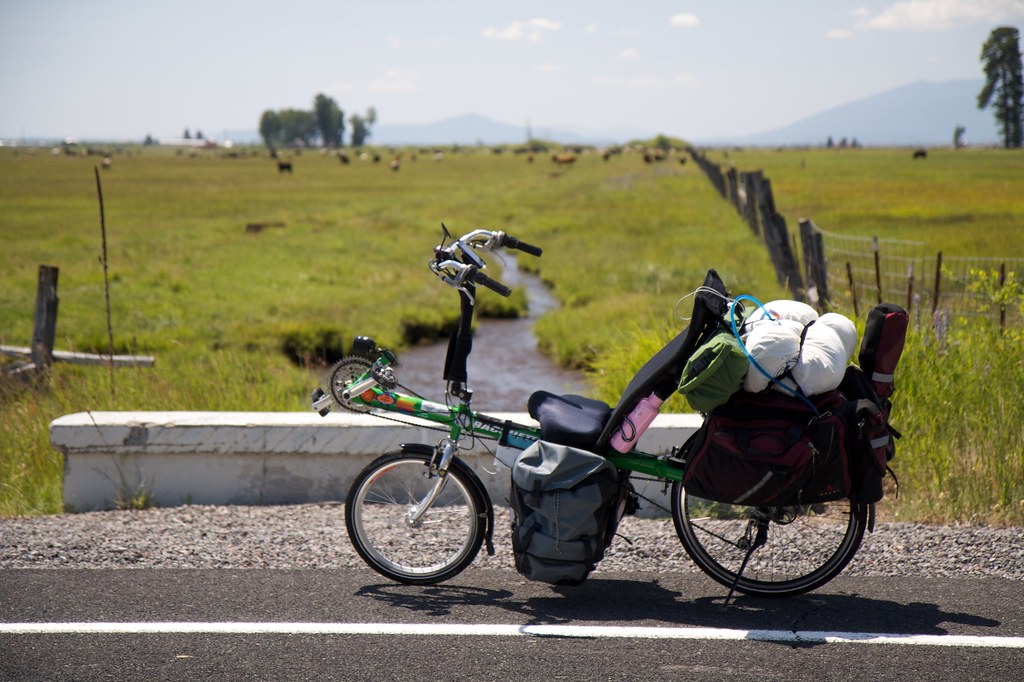
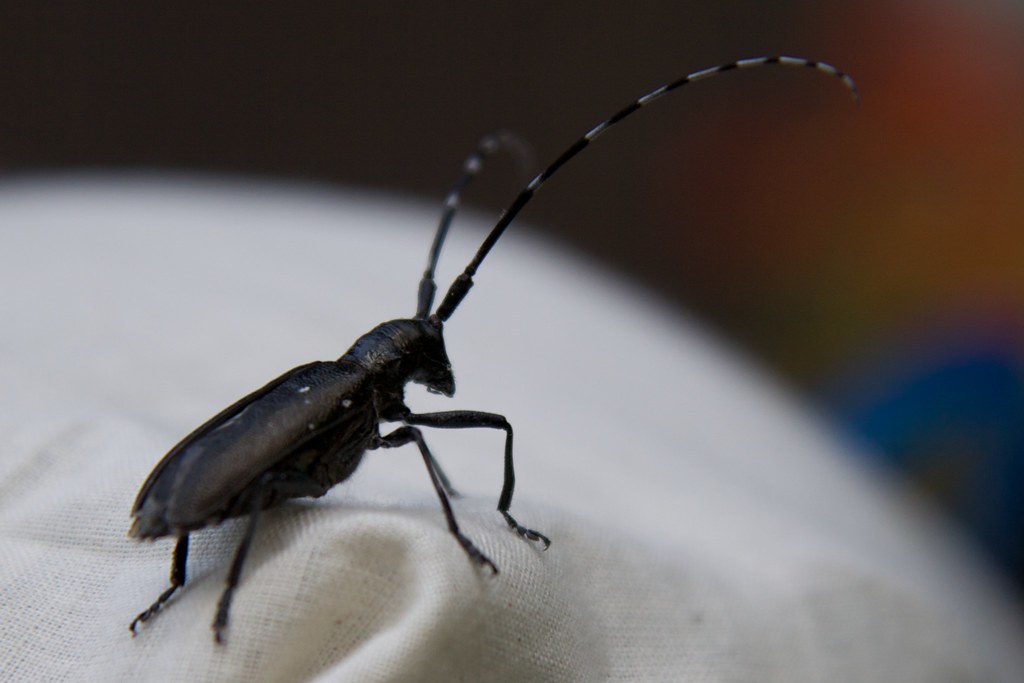
Probably only dead for a couple of days. Then, as I’m completing the day’s journey and checking in at the Rocky Point Resort, I discover this fellow walking around on the back of my bike:
I’ve never been to Crater Lake, and even though I’m dead-on-my-feet tired (which is no way to start a bike tour), I notice that there are daily boat tours of the surface of the lake – a great way to see it up close and personal. The catch is, you need to walk some 500 feet down from the rim of the crater, on a steep switchback trail, to get to the boat launch. Dad graciously agrees to hang around while I go on the tour, and he drives around exploring the rim to kill some time. Meanwhile, I slog down the trail, slapping at hundreds of mosquitoes, with my camera held in one fist.
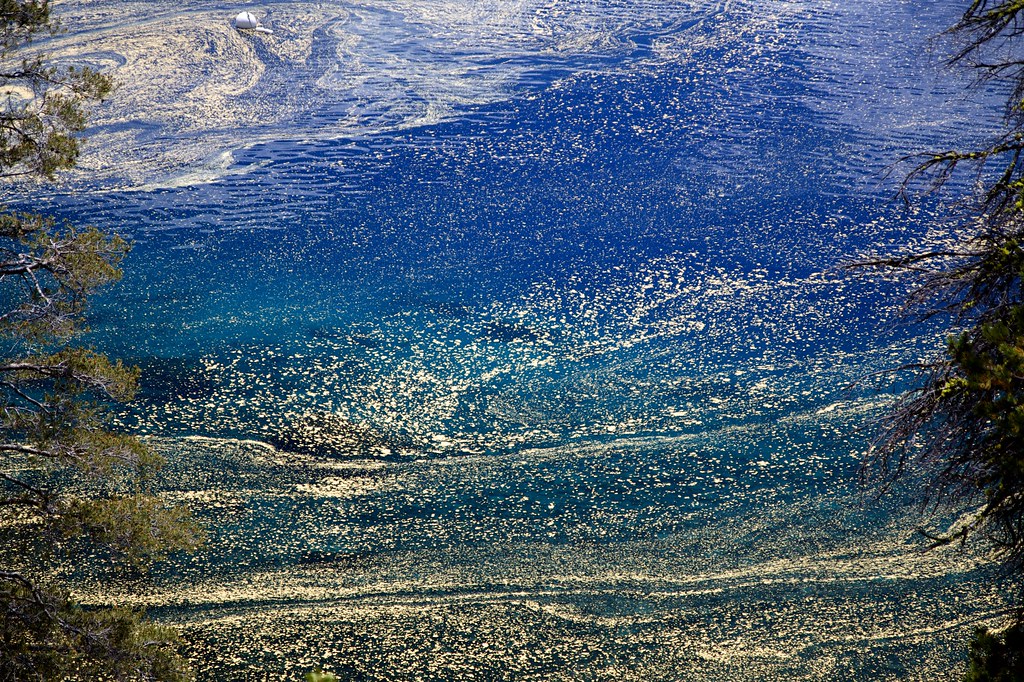
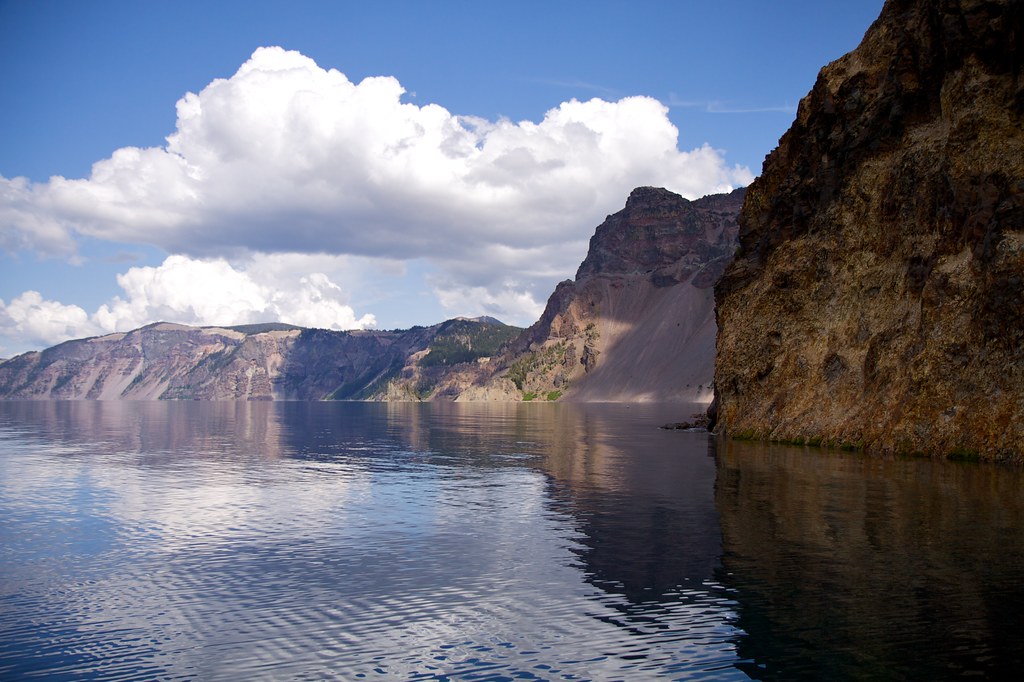
From the head of the trail, looking down the steep sides of the crater, I can see the water between the trees. It reflects the color of the sky so perfectly that the only way I can tell it’s water is by the ripples from the wind.
Further down the trail, the lake fills up more of the space between the ground and the sky. If you hold your hand up in front of your eyes and cover the far wall of the canyon, the lake becomes the sky. It’s pretty weird.
The lake is enormous. During the boat ride, I asked the guide why the crater didn’t just fill up, then overflow, and erode a channel in some part of the cliff wall, destroying the lake. He replied that there are several theories of why this didn’t happen, but the most popular one involves the porous nature of some of the volcanic deposits. Above a certain level, the water meets the edges of these deposits and seeps through, forming springs along the outer face of the mountain.
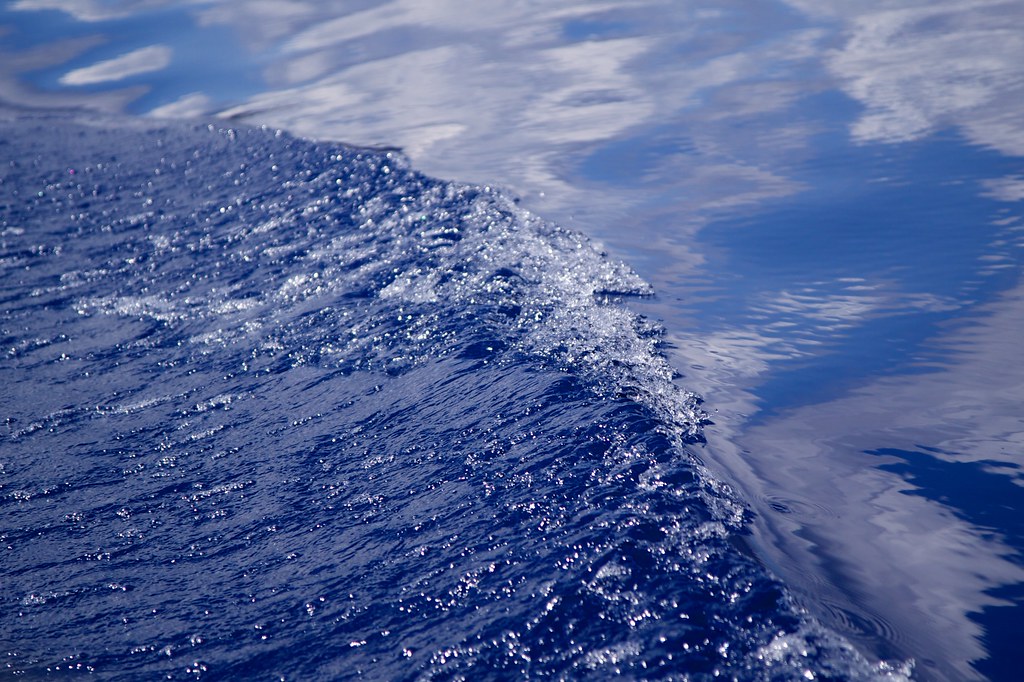
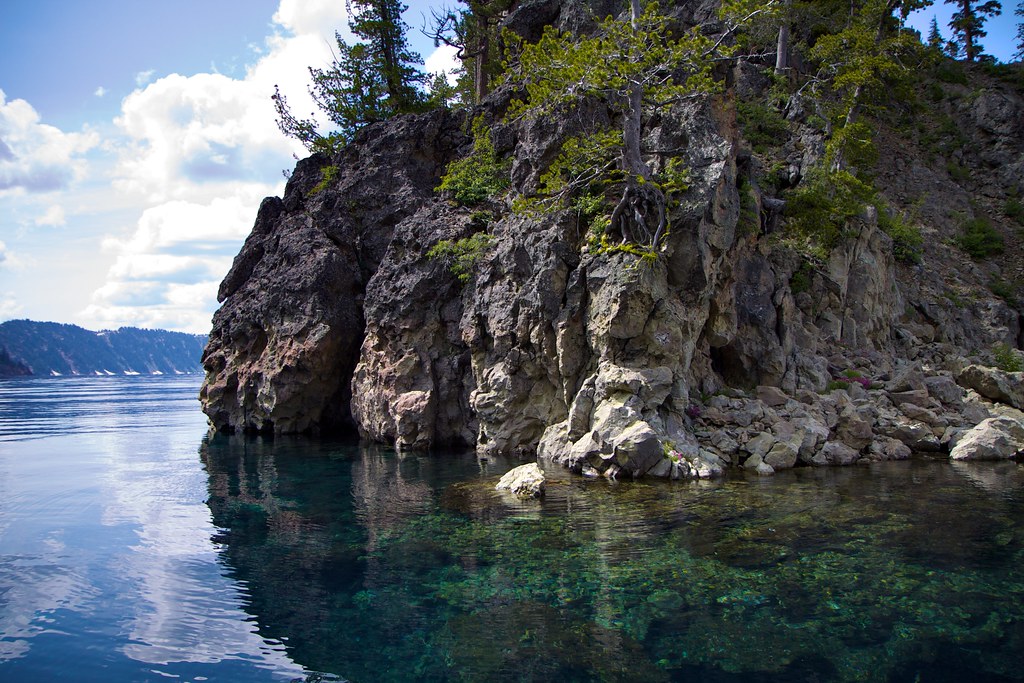
The clouds seem too low, because the altitude of the lake is abnormally high. The water is uniquely clear and still, and reflects the clouds strangely.
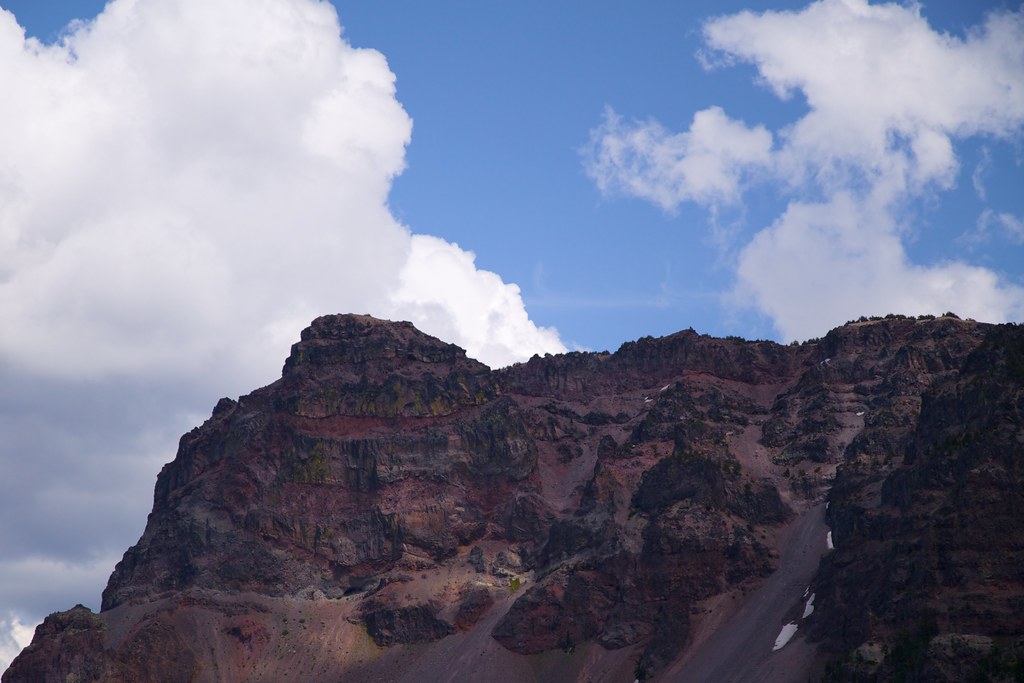
Looking up at the island in the center of Crater Lake.
See that dark blue edge on the water there, between the foreground and the background, starting at the corner of the island? There’s a cliff under the water there. The lake is much deeper beyond the cliff, so you can see more water below, and more reflected sunlight.
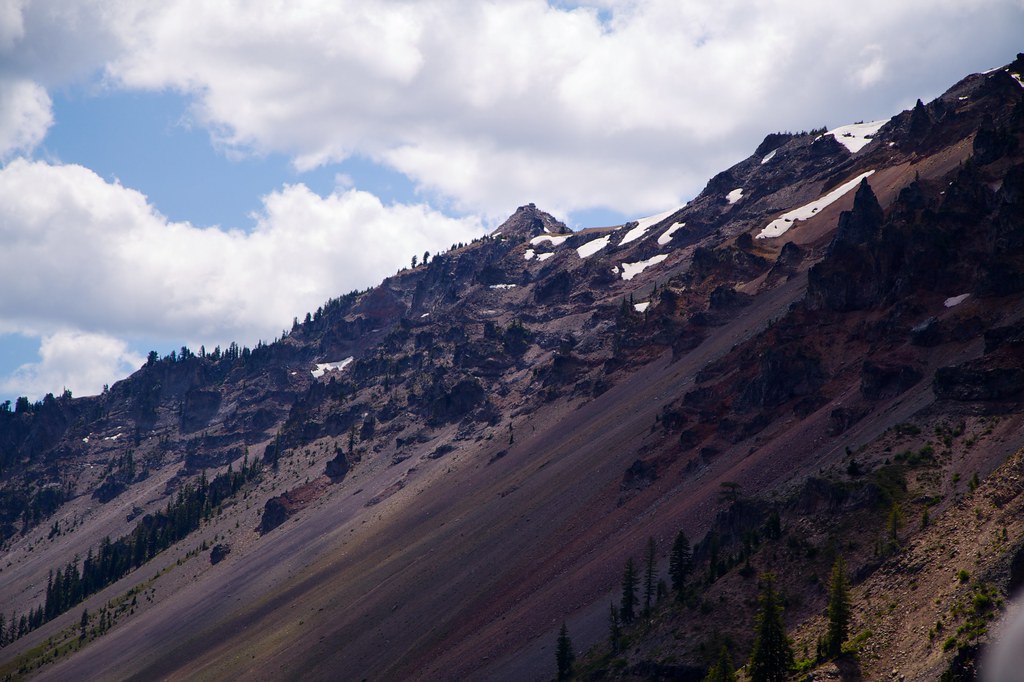
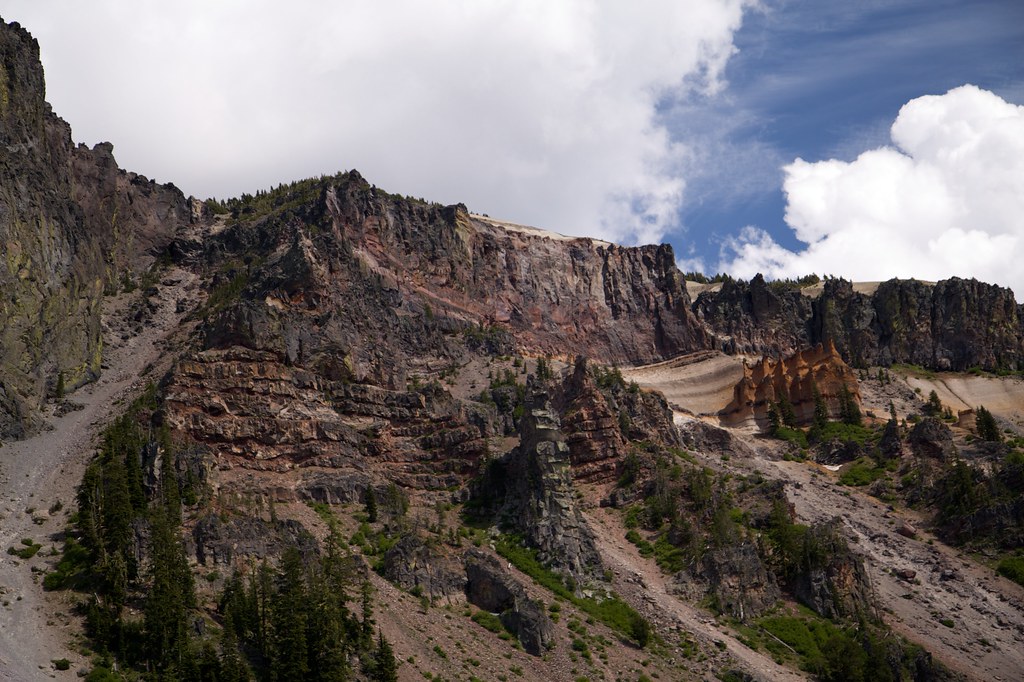
That formation on the right is called the “Pumice Castle” by the tourguides. I’d love to climb down to it, but the route would probably be very difficult. I can’t help imagining that there’s a door in it leading to some kind of medieval theme park.
My loop of piano music and my face-mask is giving me brief flashes of sleep, but the vet sitting next to me puts a stop to that by jabbing me in the ribs. I pull up my sleep mask and say, “Eh??” He points across me, out the window.
The dark triangle of Mt Shasta is sailing slowly across the horizon, east of the train. Graceful ribbons of snow still curve down from its near peak. As I watch, the mountain rotates a little more, and the second peak of Shasta swings into view. “That’s funny,” I say, “I didn’t know Shasta had two peaks.”
“Well, the near peak is usually the only one you can see from Highway 5, and the far peak is the one you can see from Klamath Falls,” explains the vet.
“Ah.”
As we continue to skirt the mountain, we pass through vast hills of of sharp, porous black rock. No plants grow on it; no soil is mixed with it. It looks like the surface of an inhospitable alien world. “Man, I’d hate to trip and fall on that stuff,” I say. The vet chuckles.
I watch the hills for a while longer, then get tired of them and start looking around the train. In the seats to my left sit a sun-tanned man and his sleeping daughter. The man is slowly whittling the rough edges of a large rectangle of wood – a chain link. The link is attached to others, hanging down to the floor. Apparently he passed the night by carving a wooden chain out of a solid block. Perhaps he’ll sell it to a knickknack shop when he arrives in Klamath Falls.
I never did learn the vet’s name, but I did hear all kinds of personal details about his health problems. Most of them did not stem from the war, actually, but from an accident he got into while driving a taxi in San Francisco. Complications from the long recovery left a wound on his ankle that wouldn’t heal. He might have lost his foot, except an impetuous surgeon transplanted a chunk of muscle out of his leg and over the wounded area, creating a sort of living bandage with a circulatory system.
He took off his left shoe and showed the lump of muscle to me. It was a thick grey bulge near the top of his foot, visible in flashes from the Sacramento streetlamps as they shot past the train.
He’s about as old as my own father, but has far inferior health. Crazy what a few seconds of lapsed judgement in a taxi can do … so many years of his life affected by it… But that’s the way everything works, I guess.
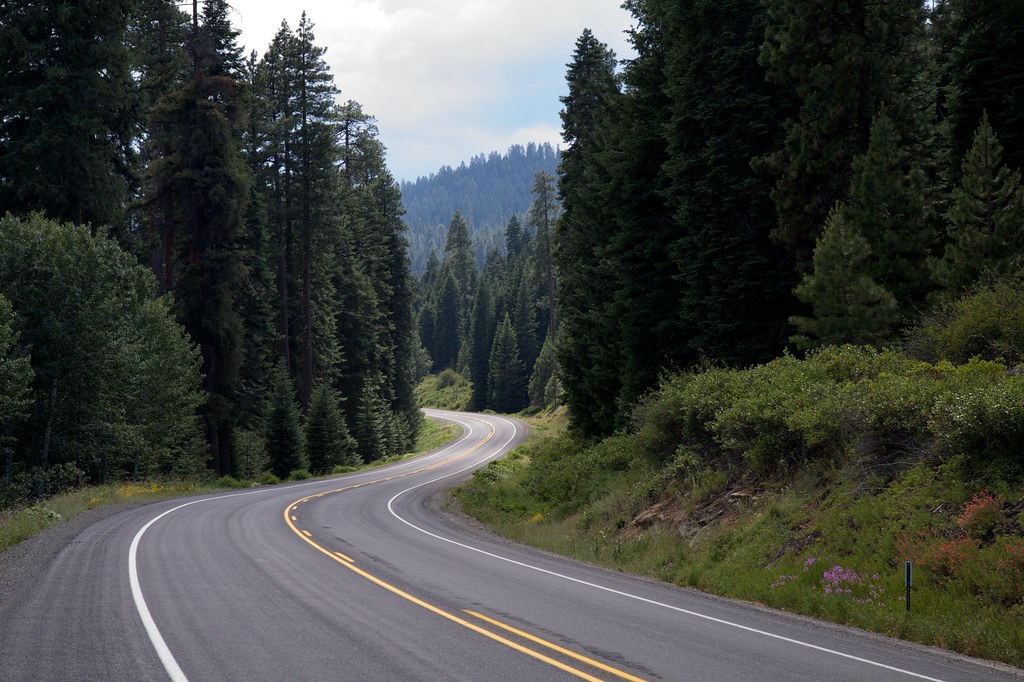
I’ll ruminate on this many times during the bike tour. It will come naturally to mind as I’m pedaling in a three-foot gap of pavement between sheer cliffs and speeding metal monsters.