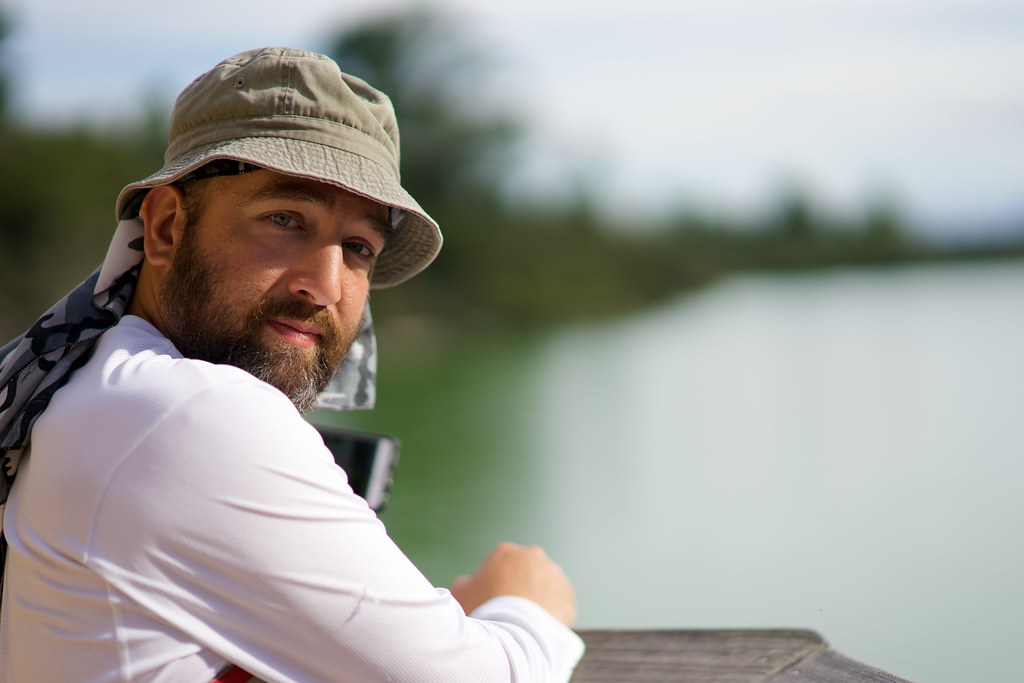
Then we launched a double-kayak out onto Lake Taupo, the first of two water excursions for the day, both scheduled 2 months in advance via the Taupo branch of Canoe & Kayak. The weather was overcast but we didn’t mind – the important thing is that we didn’t get rained out.
Lake Taupo has a surface area of about 240 square miles. Just for comparison, my current hometown of Oakland occupies an area of about 1/3 of that. It’s the largest lake in New Zealand, and the center of much local folklore. It was created by a gigantic volcanic eruption approximately 26,000 years ago – the largest eruption in the world over the past 70,000 years. The volcano is currently considered dormant – not extinct – and sports a collection of underwater geothermal vents that support sponges and other invertebrates.
We set out from Jerusalem Bay, with a fine misty view of Mount Tauhara just beyond the sparkling city of Taupo, and headed counterclockwise around the lake, while our guide told us fun stories about the Maori tribes in the area.
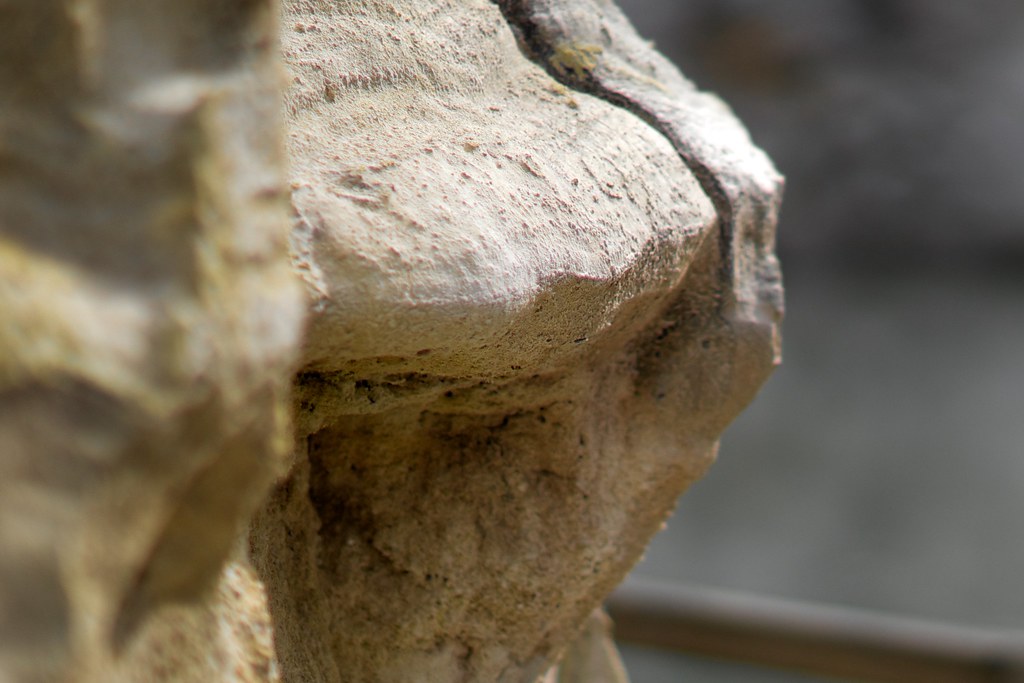
These were created in the 1970’s, the masterwork of a local artist (Matahi Whakataka-Brightwell) who managed to convince the tribal elders – who tightly controlled the development of the lake – that his creations would enhance tourism while also raising awareness of tribal history. They were created over a number of years, carved in sections during the few months of the year when weather conditions made work possible.
The main carving is over 30 feet tall, and is a likeness of a Maori navigator named Ngatoroirangi. The likeness is distinctive because of “ta moko” – the Maori tradition of physically modifying one’s face with lines and other patterns to describe one’s family legacy and position in the tribe. In other words, it’s distinctive because he was the only one with this particular pattern, and it’s also descriptive, because the pattern can be read like a code, conveying personal information about the bearer. Like how a marine will get a tattoo describing their rank or regiment, or a place where they saw action – but even more complicated and ceremonial.
Anyway, we only got about 15 minutes to float around in front of the main carving in peace, and then a couple of tour boats rolled up, stuffed with onlookers. We felt smug that we could actually touch the carvings while they could only look!
We paddled back the way we came, and stopped for a break at an outcropping of smooth rocks that presented an easy place to beach the kayaks. Some of us drank tea and ate snacks, and some of us went plunging into the water, which was surprisingly pleasant.
All told, it was a fine outing on the lake, and it only used up the first third of the day. We rowed back over to our starting point, listening to more stories about the history and geography of the area, and then clamored into the company van and returned to Taupo for lunch.
Kerry and I walked around downtown in search of a restaurant, and passed by a store that reminded me of hipster culture back home:
I first heard of “Shabby Chic” a few years ago in the Bay Area. Apparently it’s a style of decoration where you make your house look like the interior of an abandoned barn that kids have been using as a fort.
I first heard of “Shabby Chic” a few years ago in the Bay Area. Apparently it’s a style of decoration where you make your house look like the interior of an abandoned barn that kids have been using as a fort.
I first heard of “shabby chic” a few years ago in the Bay Area. Apparently it’s a style of decoration where you make your house look like the interior of an abandoned barn that kids have been using as a fort.
I find it both puzzling and hilarious that someone has opened a store dedicated to selling items that I might find sitting on the sidewalk in Oakland.
I find it both puzzling and hilarious that someone has opened a store dedicated to selling items that I might find sitting on the sidewalk in Oakland. The rent for this shop must be little or nothing, because I can’t believe their margins are very big. Taupo is a big city by New Zealand standards, but is it big enough to support a store this frivolous? Who knows.
Anyway, Kerry and I ate some excellent fish and chips and home-brewed cider while we waited for our second tour to begin. On the walk back to the kayak place we met with a fellow cycle tourist who sounded remarkably like Cary Elwes:
He’s originally from Alaska and has been traveling all over the world on those same tires. What I find most interesting about his setup, though, is the solar panel arranged on the back. I remember obsessing for months and months over the best way to charge my collection of gadgets on the road, and after all the dust settled, I faced the simple fact that I was probably never going to go anywhere more than two days’ ride from a wall socket – and if I did, a cellphone would be worthless anyway. I wonder how and why this fellow reached a different conclusion? He’s certainly more traveled than I am…
I didn’t think to ask this question in the moment, though. We just chatted about our histories, took a photo, and moved on. Kerry and I didn’t want to be late for our next excursion:
An easy float down a few miles of the Waikato River! We put in right around here at Pois Road:
The water was quite shallow here, and when we stepped into our kayaks they pressed into the sandy bottom and wedged us in place. Here’s a shot of Kerry pulling herself forward on one of my oars, next to our guide.
Kerry grabs her oar, and I pull her forward into the water.
Just ahead of us we could see a group of college-age kids setting forth on a collection of inner-tubes, tethered loosely to each other with rope. They had an extra inner-tube with a cooler jammed inside it, filled with drinks, that they would reel in and plunder from time to time.
Moving past some fellow drifters. That’s four inner tubes: One for each person, and one for the cooler.
The canyons along the river. This particular cliff has a bungee-jumping platform built over it.
For the less adventurous, there’s a hot spring a little farther along the riverbank, feeding into the river from a small waterfall.
Our kayak trip made a brief stop at a riverside hot spring. It was odd seeing so many people, after seeing so few on the river.
“This is actually a very slow day,” our guide said. “In December you’ll see well over a hundred people here, every day.”
Our kayak trip made a brief stop at a riverside hot spring. It was odd seeing so many people, after seeing so few on the river.
“This is actually a very slow day,” our guide said. “In December you’ll see well over a hundred people here, every day.”
The hot springs was choked with other tourists, most of them of the well-to-do European kind. It was odd seeing so many people here after seeing so few drifting on the river.
“This is actually a very slow day,” our guide said. “In December you’ll see well over a hundred people here, every day.”
Kerry warmed up her feet in the water. I didn’t feel cold and I didn’t feel like swapping my clothes, so I just posed for a picture instead:
After that it was a short drift to a riverside campground with a crude boat ramp, where we disembarked. Our total distance doesn’t look like much if you view it on a map, but it was a very relaxing and relatively inexpensive way to spend a couple of hours, especially after all the rowing we did earlier in the day on Lake Taupo.
Back in town we got thai food from a much better restaurant than the one we’d tried the day before. They actually served a thai iced tea! YESSSS!
We handed our laundry to the in-house washing service, and watched some Venture Brothers. It rained pretty heavily. We talked for a while about our plans: Should we leave here a day early, foregoing the unscheduled time around Lake Taupo, in order to get more wiggle room on our journey to National Park? We might need the extra time if one of the shuttle buses is too full to take our bicycles…
We decided to sleep on it. As we were preparing for bed, we heard a knock on the door and a man handed our laundry back, freshly washed and folded in the sack we’d provided. Good! No need to wait for that in the morning.
Sleep came easily since we were exhausted, but we woke up later when a group of people a few rooms down started making a huge ruckus, smoking and laughing on the front porch of their room. I walked out and asked them to keep the noise down in as calm a way as I could, though if they’d kept it up I would have probably lost my temper and yelled at them quite loudly. Kerry called the room service line to file a noise complaint but they didn’t answer. Hoohah!
Start the day off right, with a visit to the local kittycat! (We found this cute fellow when we stopped for snacks at the thermal park, on the way out of the area.)
This kittycat lives at the Waiotapu thermal park. It was quite friendly!
This kittycat lives at the Waiotapu thermal park. It was quite friendly!
It was easier to stop at the park than to prepare any kind of breakfast at Hotel Waiotapu, since every item in their self-service area was broken and smelled faintly of fried electronics – including the kettle, the microwave, and the fridge. Clearly that place makes its money by being very conveniently located, not by offering anything close to decent amenities or service.
(As we checked out, Kerry and I noticed that even though our room was tiny, someone had found enough room in it to place a bible. Somebody – neither of us is willing to admit who it was – wrote inside it, “ALL THE PILLS MEANS ALL THE JESUS!” and put it back in the drawer.)
Anyway our task for today was to go 30 miles south from Waiotapu to Taupo, on the shores of Lake Taupo. Highway 5 is the main route between these two places, but the heavy traffic is not ideal for cycling. Fortunately Broadlands Road covers most of the same distance and is much quieter. (Nevertheless we still encountered plenty of big trucks, and had to pull entirely off the road for some of them.)
Along the way we found even more snacks, on a handy apple tree leaning over a farmer’s fence:
It took a while, but Kerry and I figured out that this sign reads "The Fitzgeralds".
The weather was glorious, yet again. We pedaled through gently rolling hills and flatlands radiant with a hundred shades of green and yellow, chatting on our intercoms and stopping wherever we wanted to take photographs or mess with our gear or pee behind a bush – or simply hang out. We had the entire day to go 30 miles, most of which was easy riding.
We saw lots of animals on the farmlands surrounding the road (and a few more animals squished onto the surface and baking in the sun) but the two that eventually tempted us enough to stop were these fine horses:
They loved the fresh grass we gave them from the other side of the fence, and definitely loved the apples that we tossed over for them to sniff out and pick up later.
(It takes a little bit of practice to feed a strange horse without being bitten.)
We named these horses "Bully" and "Bieber". Bully is the one on the right, obviously.
We named these horses "Bully" and "Bieber". Bully is the one on the right, obviously.
We named these horses “Bully” and “Bieber”. Bully is the domineering one on the right, of course.
The road rolled by, along with the sunny afternoon. Sometimes it felt like I was back in California, cycling around Moss Landing or Hollister. But then I’d see a logging truck, or something like the Ohaaki Power Station and remember where I was.
The flat eventually changed to a mild uphill with a slight headwind, which combined to make our progress extremely slow. We spent hours covering what seemed like only a few miles leading in to Taupo, and finally arrived at the top of a hill, where we paused for a break and saw a gigantic logging truck – the largest one either of us had ever seen in New Zealand – push out into the intersection and go chugging away. It was so epic we had to film it.
On a bicycle tour we get up close and personal with trucks, and New Zealand has some real whoppers. This is the biggest one we saw.
Go ahead and count – it has 42 wheels. It took 1/3 of a minute to cross the intersection.
On a bicycle tour we get up close and personal with trucks, and New Zealand has some real whoppers. This is the biggest one we saw.
Go ahead and count – it has 42 wheels. It took 1/3 of a minute to cross the intersection.
It has 42 wheels. Go ahead and count ’em! It took 1/3 of a minute just to roll across the intersection.
I don’t think it’s any coincidence that the opposite corner of the intersection is residence for a grave marker, identifying some sad highway accident from the recent past:
This roadside marker – showing where two people lost their lives in an accident – happens to be planted just across the intersection from where we saw the gigantic logging truck. You can see it in the previous video.
This roadside marker – showing where two people lost their lives in an accident – happens to be planted just across the intersection from where we saw the gigantic logging truck. You can see it in the previous video.
And not too far away: The gravesite of Optimus Prime?
After that it was almost all downhill into Taupo. The motel was easy to find and only a block away from the kayak place we needed to show up at the next day. We walked down to a thai take-out place and grabbed food, chomping it right there on the sidewalk on a tiny table, then walked back to the motel and crashed. Ka-bam!!
It was another great day, even though it was just a little too long in the saddle.
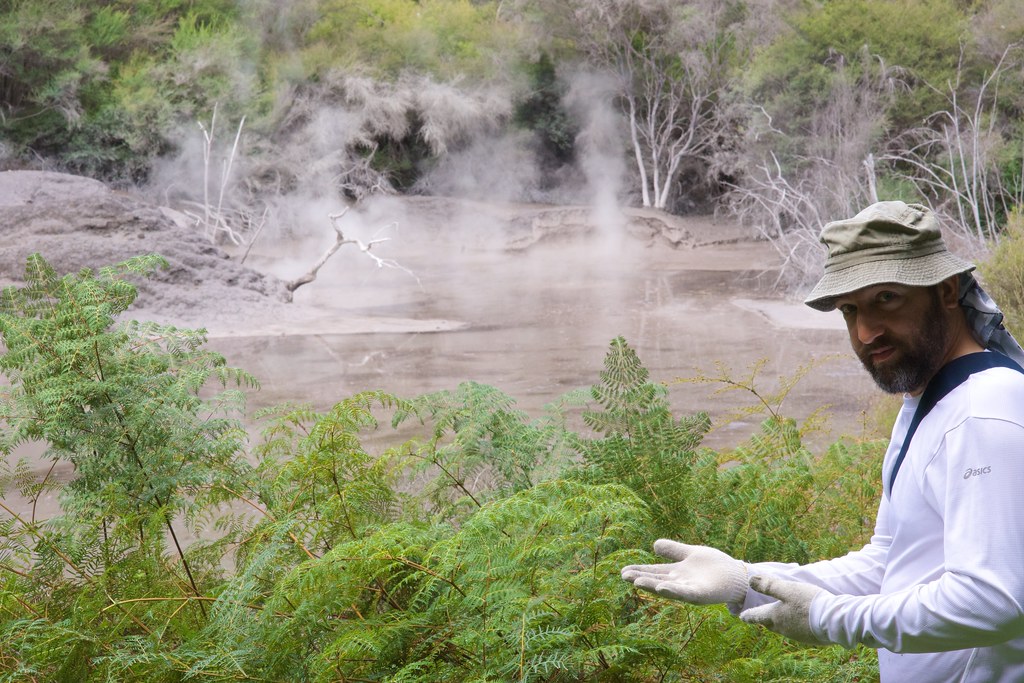
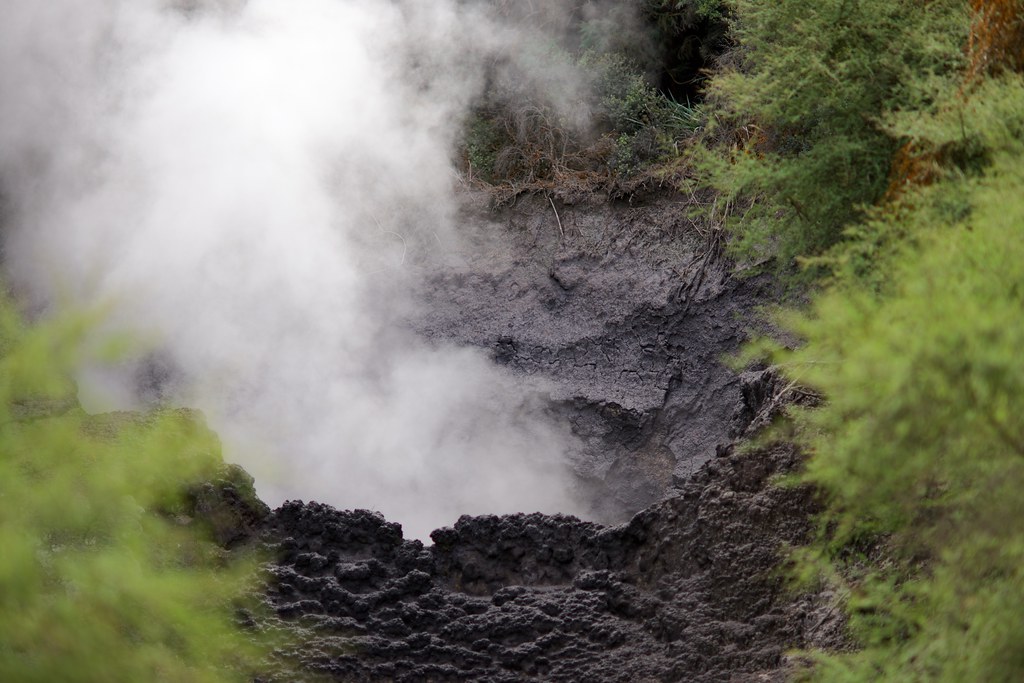
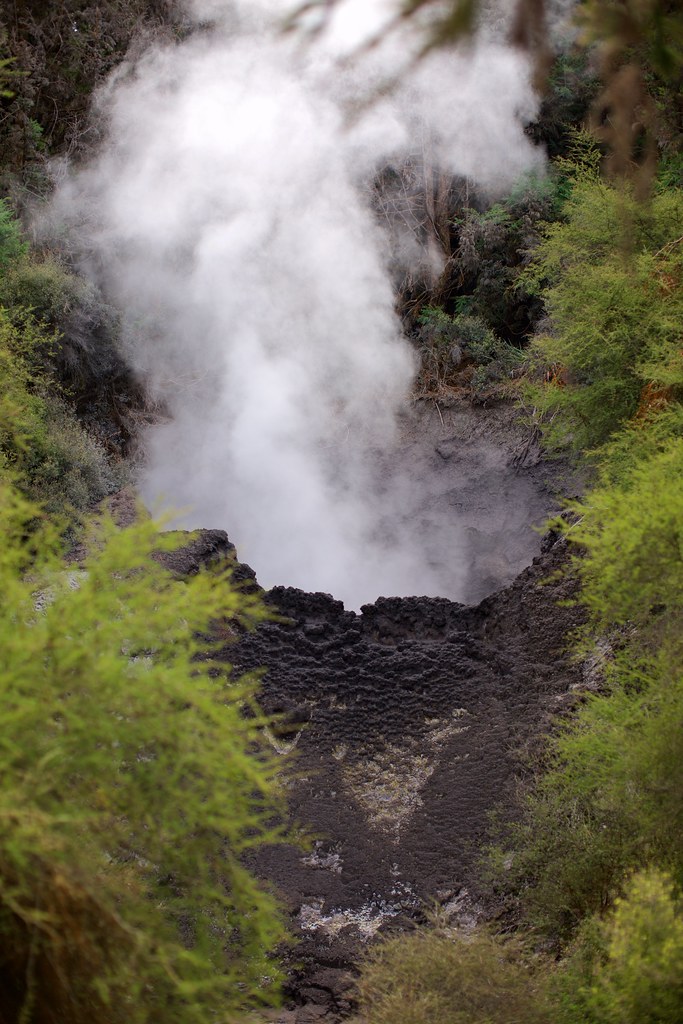
We paused to consult our map, and Kerry heard a deep thumping sound nearby. We bushwhacked our way into the woods, and found THIS.
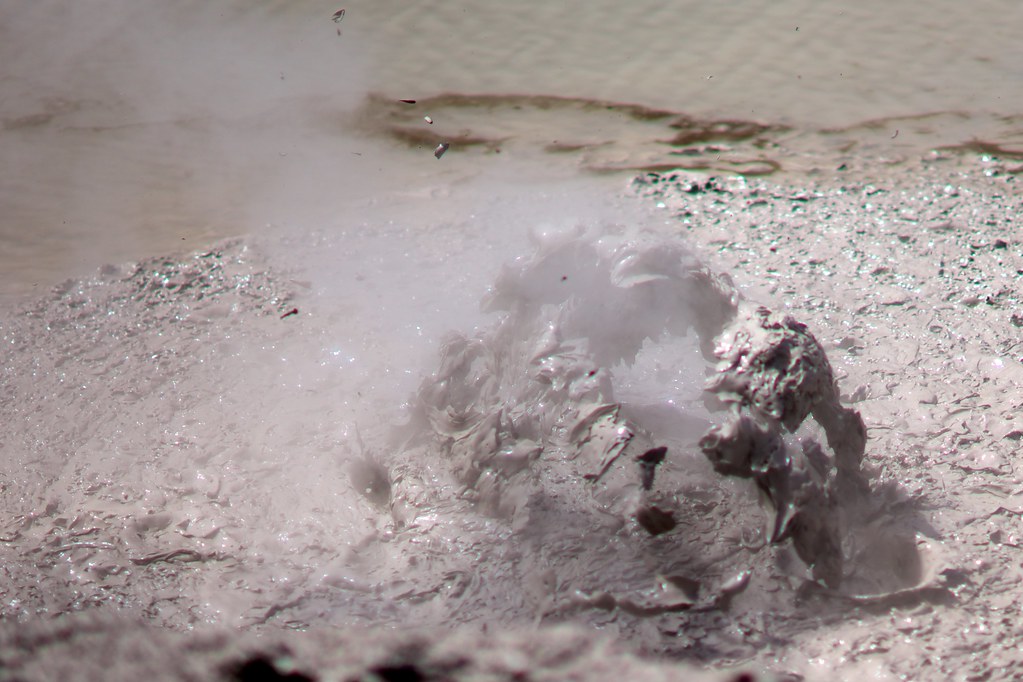
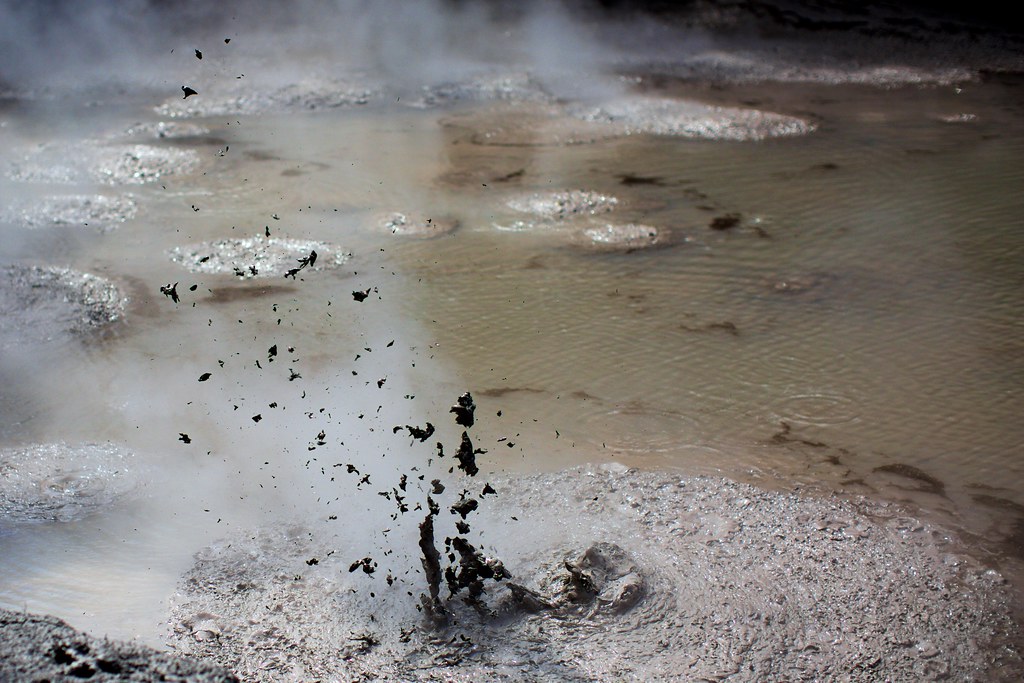
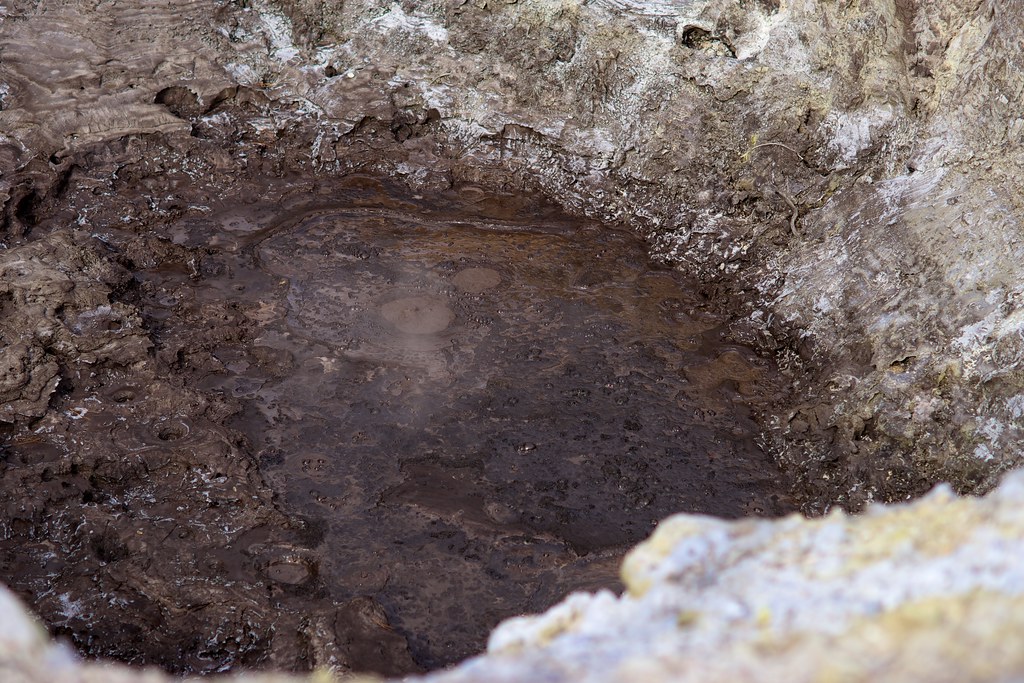
A great, big, boiling, festering mud hole in the middle of the forest!
You probably can’t hear it in the video, but it’s making noise like a couple of horses throwing a dance party in a closet. An endless, semi-rhythmic thudding sound that doesn’t just vibrate your ears, but vibrates the whole area around you.
The truly great thing about this experience was the act of discovery. Kerry and I just crept into the untracked forest to find the source of a mysterious noise, and ended up staring at this infernal thing. No guideropes, no fences, no warning signs. Not even anyone else around. If your judgement is poor and you tumble over the edge, you will die, and chances are nobody will even discover your corpse for a long time. By the time they do, your flesh will be boiled into mush, leaving only a stew of bones and some expensive equipment to tempt the next victim.
Awesome!!
But I’m telling this tale out of order. We didn’t go wandering straight into the forest, we ended up there after exploring a slightly overgrown path leading away from the established touring area. We didn’t see any signs warning us away, so like most optimistic and slightly devious tourists, we “assumed it was allowed” and kept going. I know; we’re monsters.
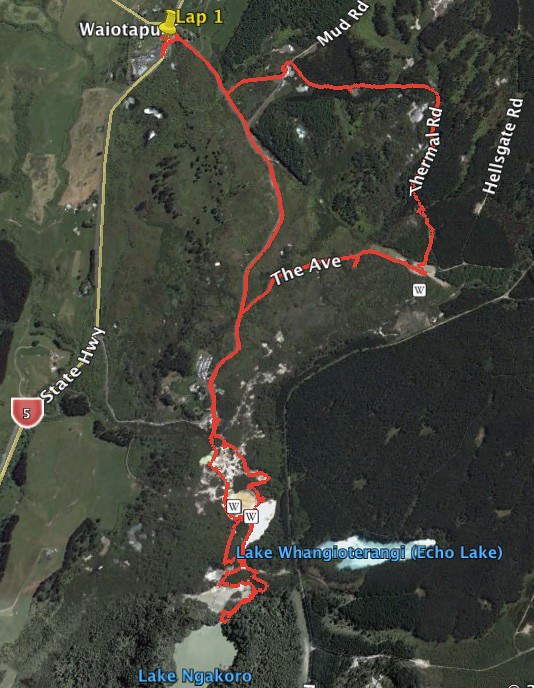
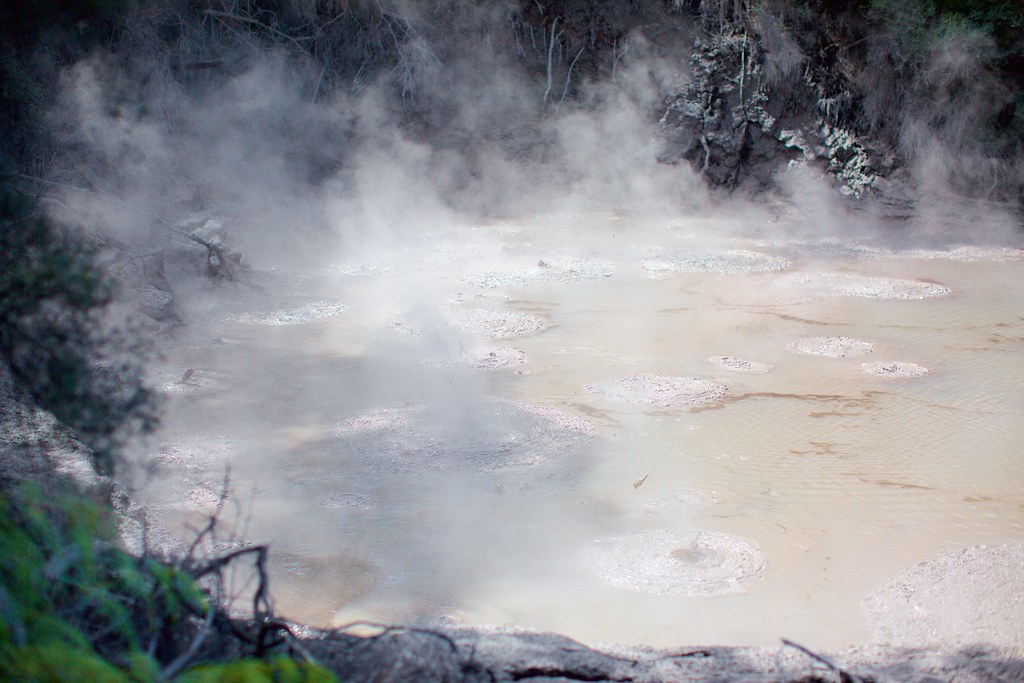
Only part of that is off the beaten path – the part labeled “Thermal Road”. After an hour or so of quietly exploring it we did become rather nervous that we were breaking some rule, simply because we never saw anyone else around. By contrast, the first area we saw – a series of mudpots with nice walkways around them – was crowded with tourists, even during this off-season day.
That area was well-worth photographing, too. I could see why the government had decided to build fences and guardrails there. Small children were running around, and I’m sure that when some of them first saw the bubbling pools, they were seized by desire to jump into the mud and stomp around as though it were just another squishy creek-bed. That would not end well, of course.
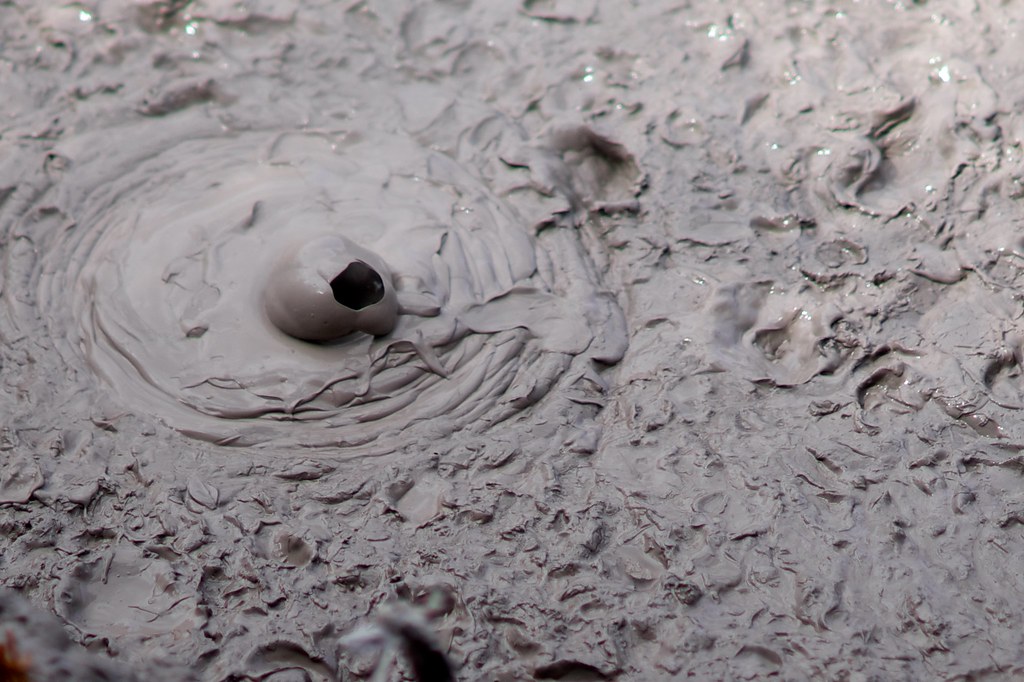
To tell you the truth, I was tempted too. At times the mud looked like melted chocolate, and I felt the totally irrational urge to scoop some up with my bare hand and lick it, just in case it turned out to be delicious pudding.
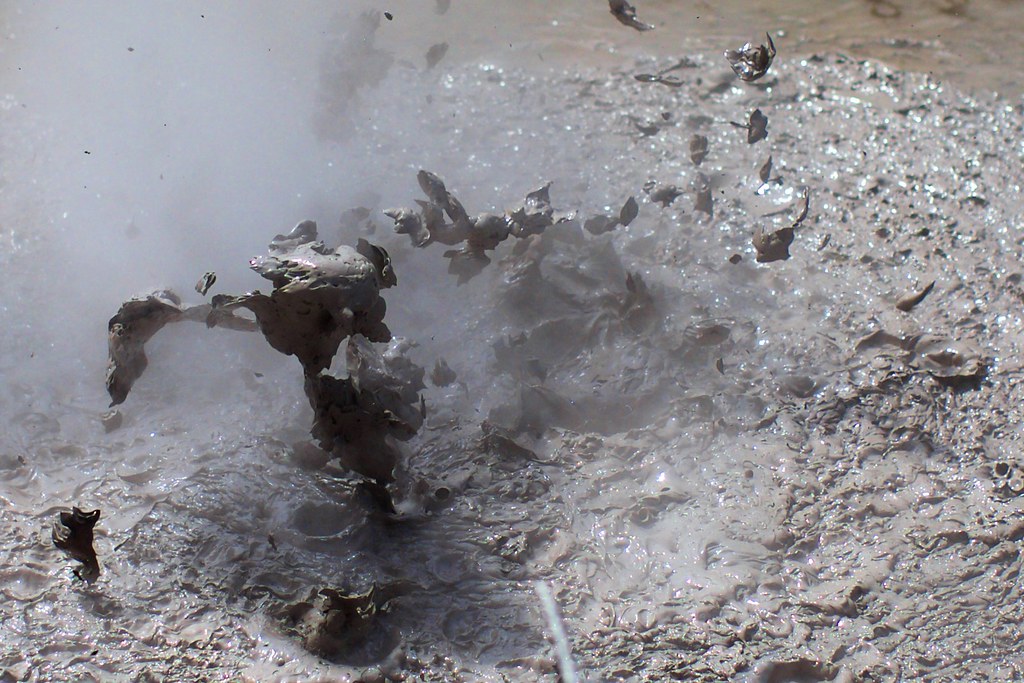
The fact that this “pudding” was constantly exploding upwards towards my face and squeezing out plumes of steam should have totally cancelled that urge. But it didn’t. Every few minutes or so I was thinking: Mmmmmm, delicious chocolate…
Delicious fiery exploding chocolate, melts your mouth – and your hand – and practically everything else in your body. Even at regular temperature, the water in the mud is still dangerous because it’s acidic, and would be unhealthy to swallow or even bathe in. This is pretty darned far from a nice chockie treat. AND YET…
Mmmmm, steaming hot pools of deliciousness! Maybe it tastes like ramen? That reek of sulfur could just be boiled eggs… Argh, stupid human brain! Stop that!
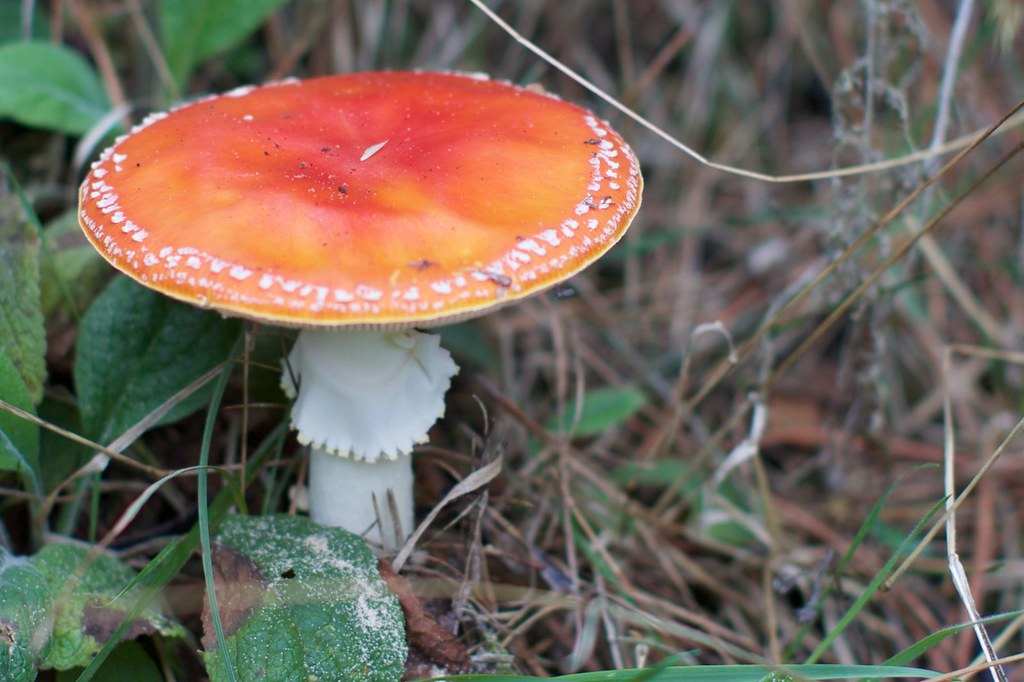
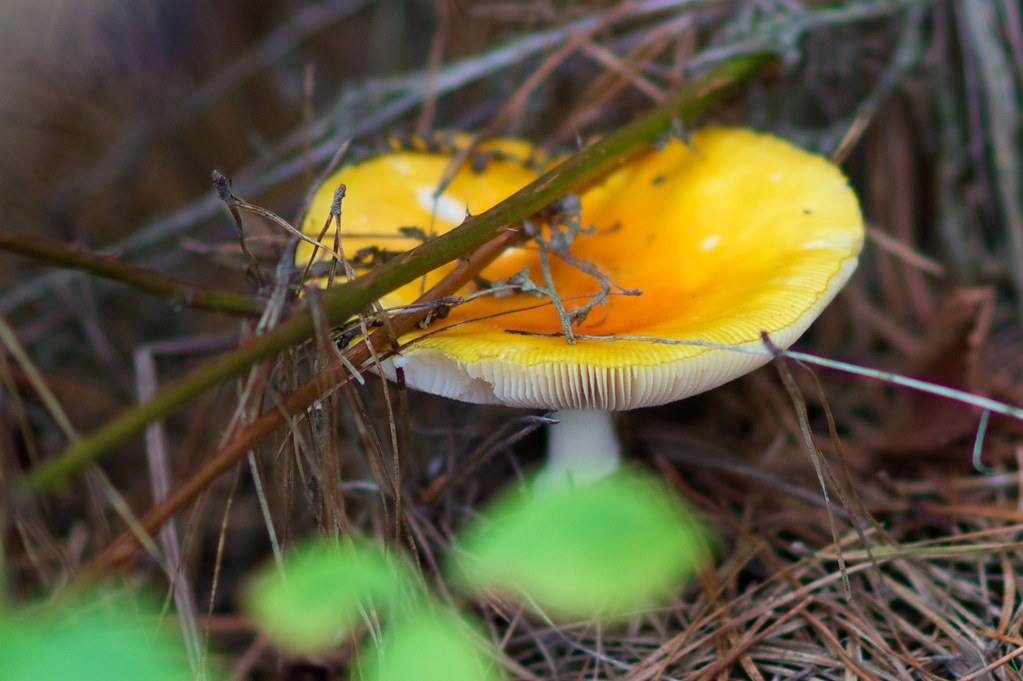
Also not to be trusted: Colorful mushrooms just a few steps off the trail. Don’t believe their candy-coated lies!
This was definitely not part of the standard tour-on-rails. One inattentive step over the embankment and you could be in serious trouble. Check out this video for an example:
Some of the weird sights – and curious sounds – were just too far behind thick foliage for us to go bushwhacking over to them. Plus there was that nagging feeling that we were disturbing an environment better left alone. If it wasn’t too far from the road and we could get to it only with footsteps we felt it was worth a shot.
During one tentative off-road exploration I encountered this scene. My main camera’s 50mm lens couldn’t capture the whole thing so I took a panorama with my phone.
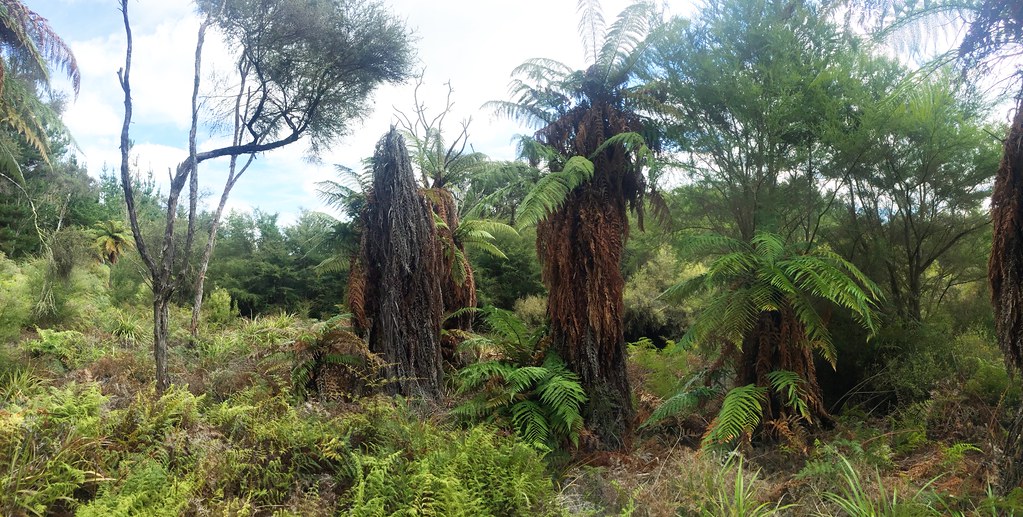
You’ll have to trust me when I say it was one of the creepiest moments in the whole trip. Each of those central “figures” in the photograph was about nine feet tall and seemed to be reaching out to me as I stared at them. Kerry was waiting back on the road, out of sight, so it was just me alone in the clearing with these ghastly formations, mixed with distant bubbling sounds and the smell of geothermal activity.
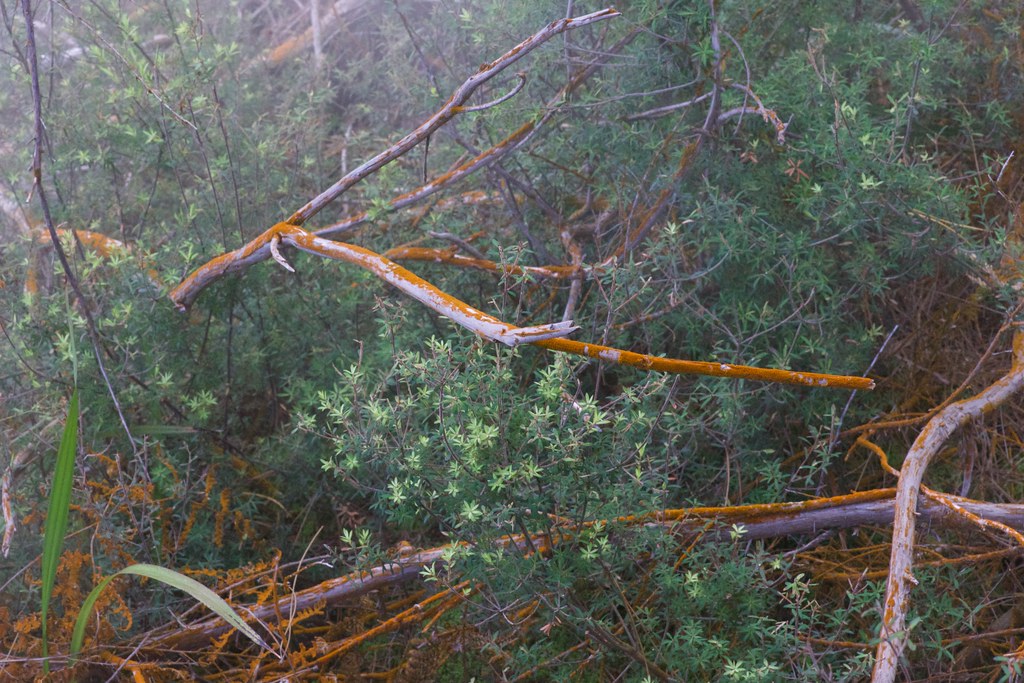
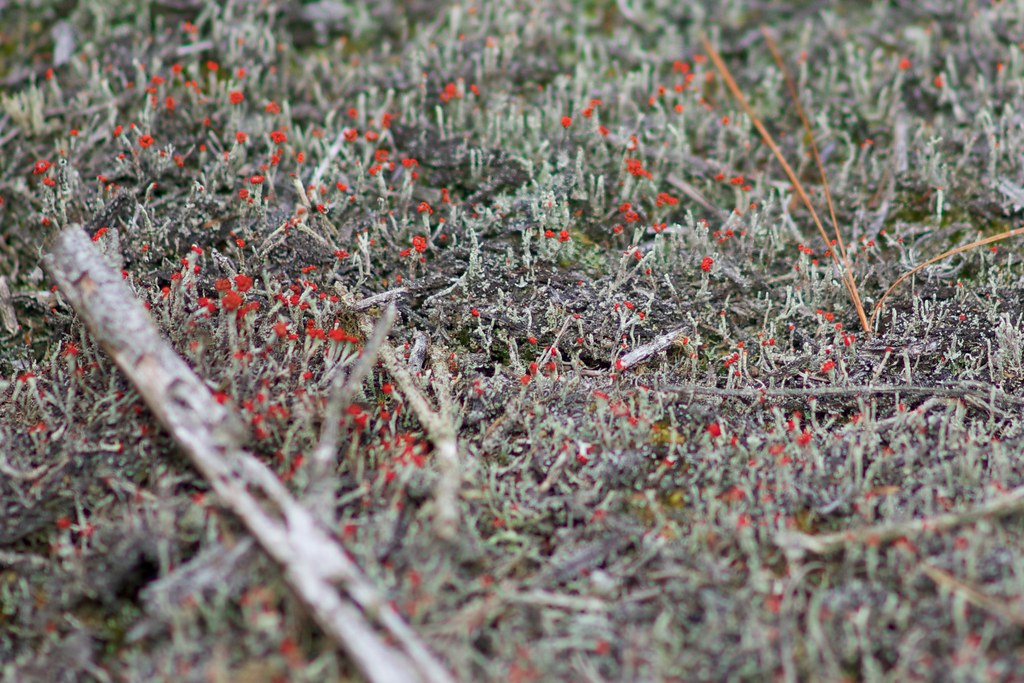
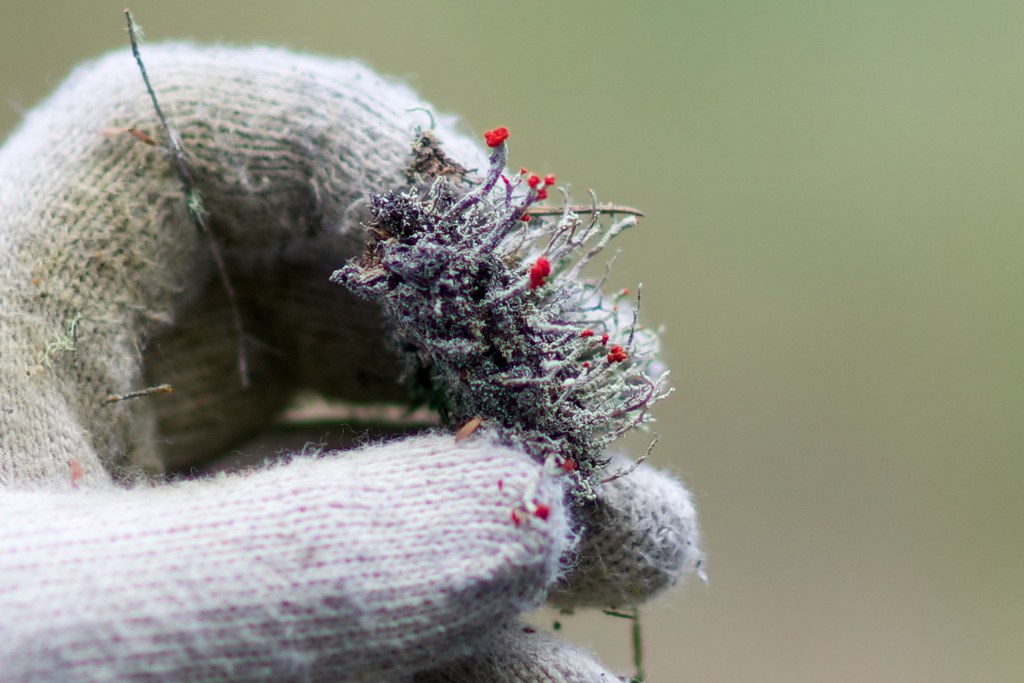
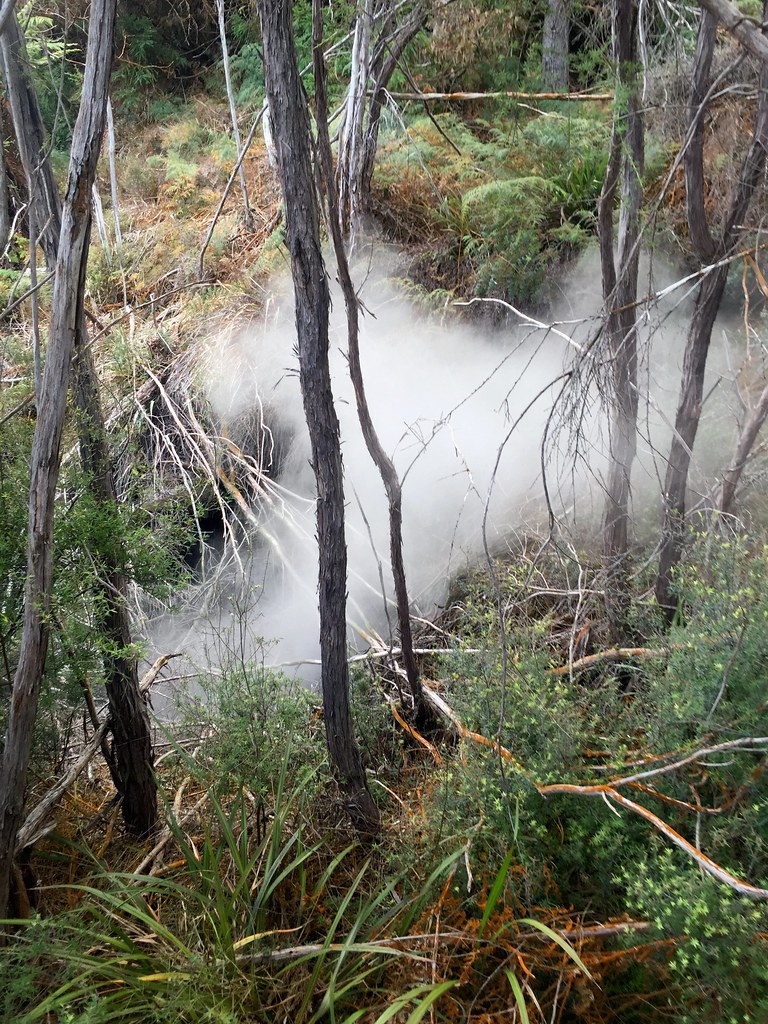
In other places, the smell intensified into a flowing mist, whose mineral content fostered strange growths of lichen.
A little ways beyond the red lichen I encountered a horde of red damselflies. I don’t think there was any reason for the color-coordination, but you never know…
These little red damselflies were all over the place here…
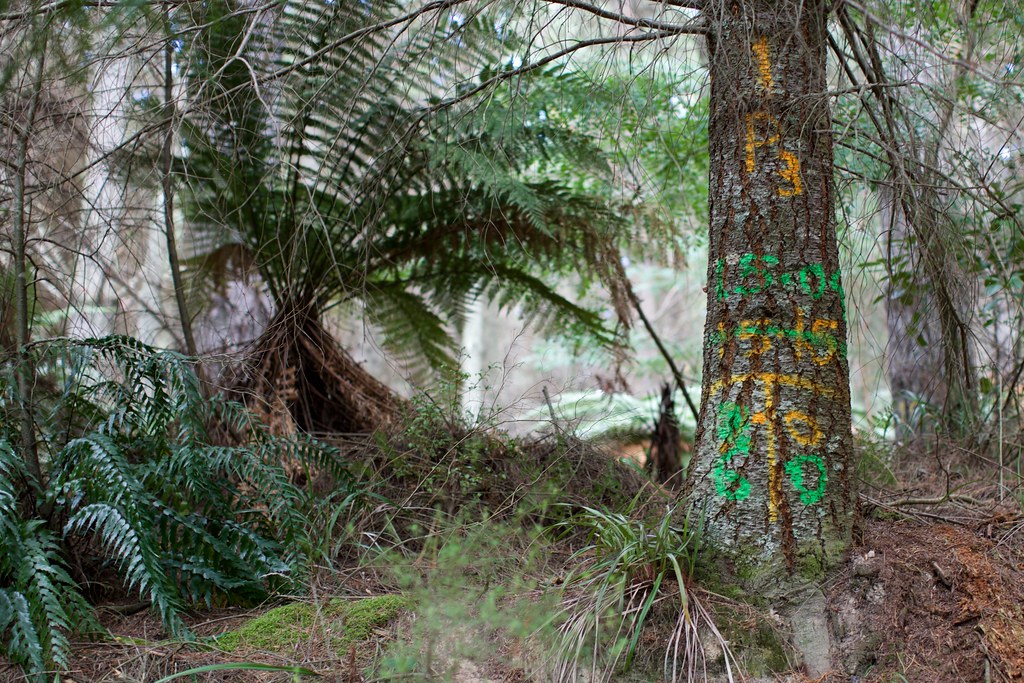
At this point we were certain this was not part of the approved tourist package. No park service would ever endorse a hike around this unstable, delicate terrain. We took a bunch of photos and returned to the road, moving faster now. Ahead of us our iPhone maps showed an intersection with a road that split off to the right, eventually meeting up with the official-sounding Waiotapu Loop Road. In due time we saw some evidence of recent human activity, which was a relief even though we didn’t know how to interpret it:
Then we spotted a man-made clearing through the woods to our right, and cut through the trees directly towards it. We didn’t have a lot of faith in our digital maps, and we weren’t willing to follow the road any longer than necessary at this point.
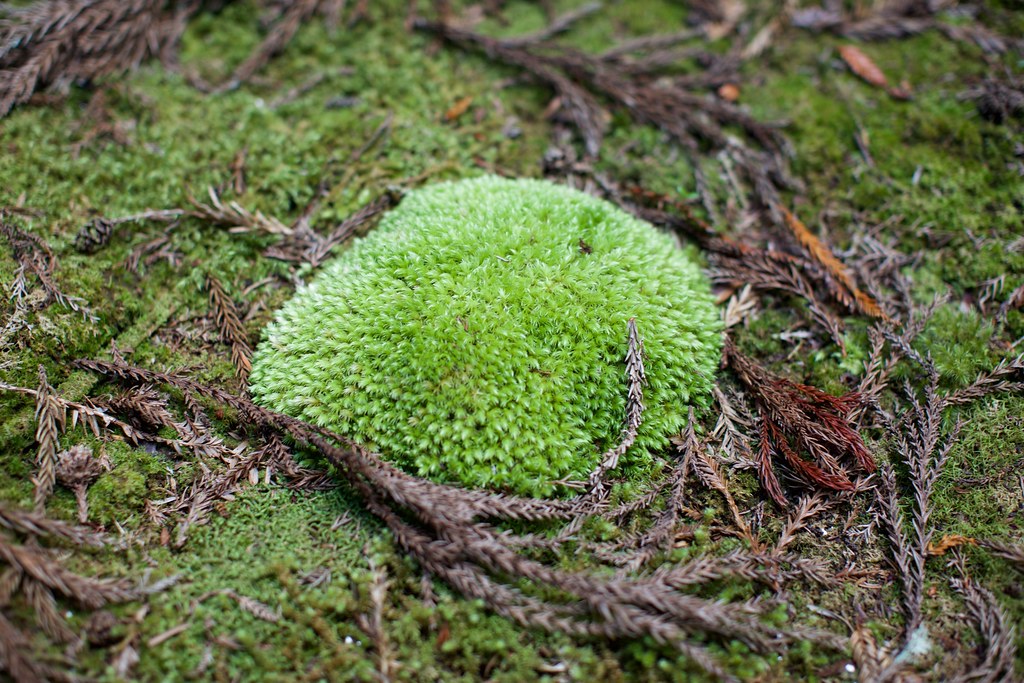
On the way through the woods we did see some nice moss-on-moss action:
Fresh moss growing in a big bulge on top of old moss.
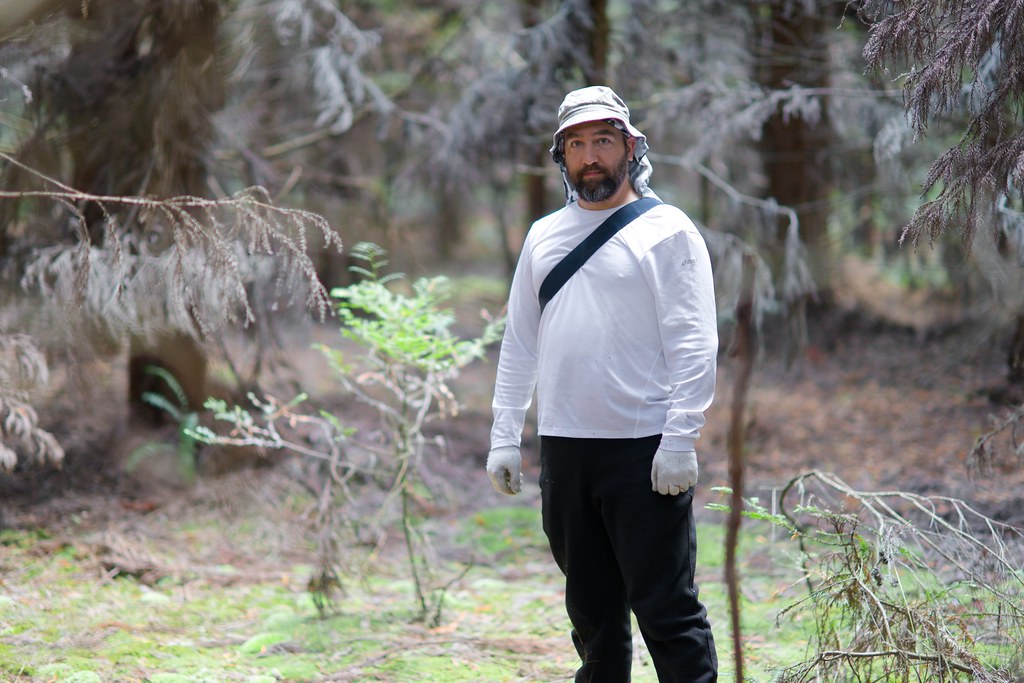
Tired and unwashed, but having an excellent adventure!
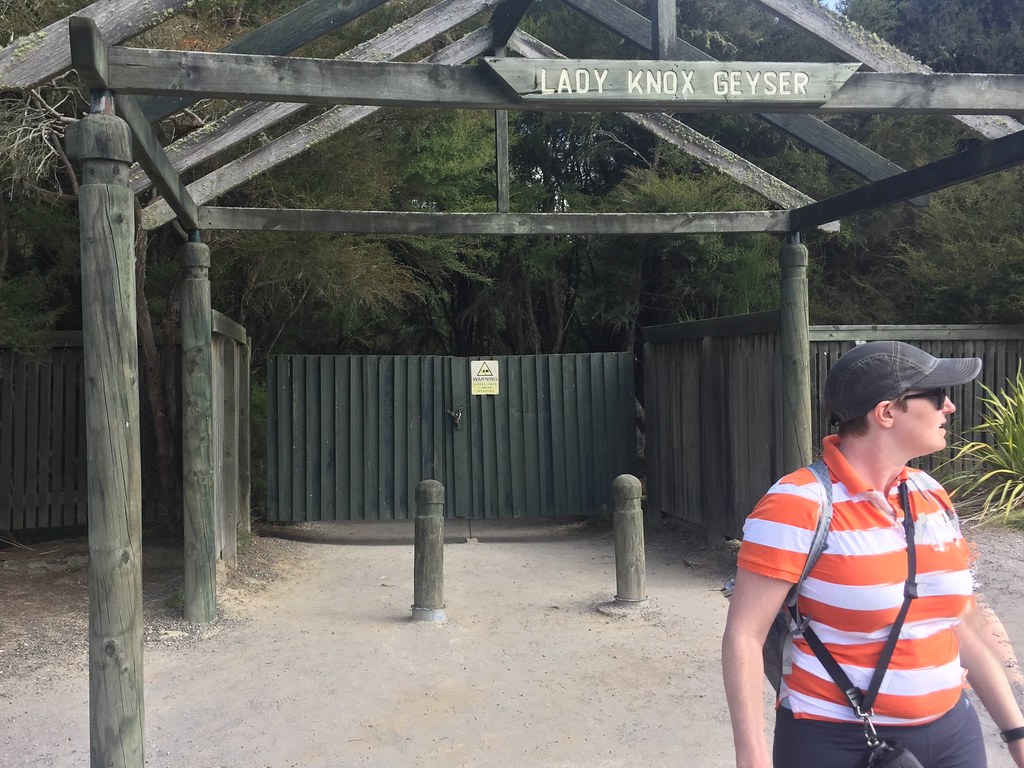
The clearing turned out to be a parking lot, next to the Lady Knox Geyser gate. The gate was closed and locked since the 10:15am eruption was already long finished, but we weren’t upset – we’d just had our own custom adventure, and were happy to be back on a regular road.
We eventually emerged from the road to a parking lot, next to the Lady Knox Geyser gate. The gate was closed and locked, however, since the 10:15am eruption was already long finished.
We eventually emerged from the road to a parking lot, next to the Lady Knox Geyser gate. The gate was closed and locked, however, since the 10:15am eruption was already long finished.
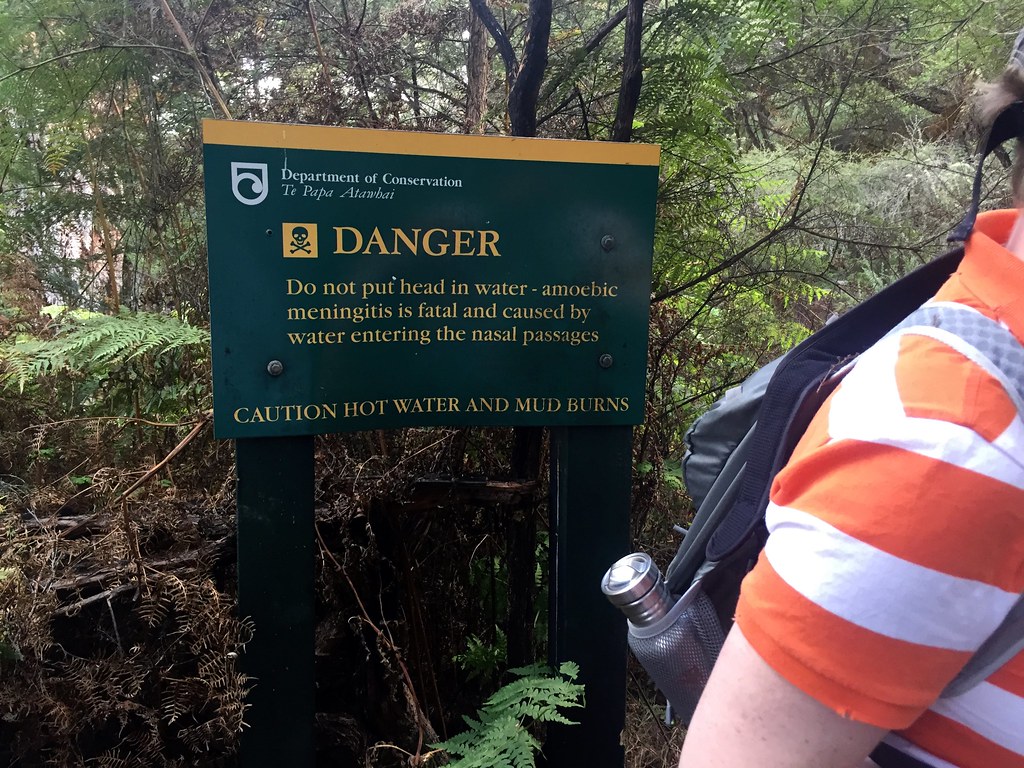
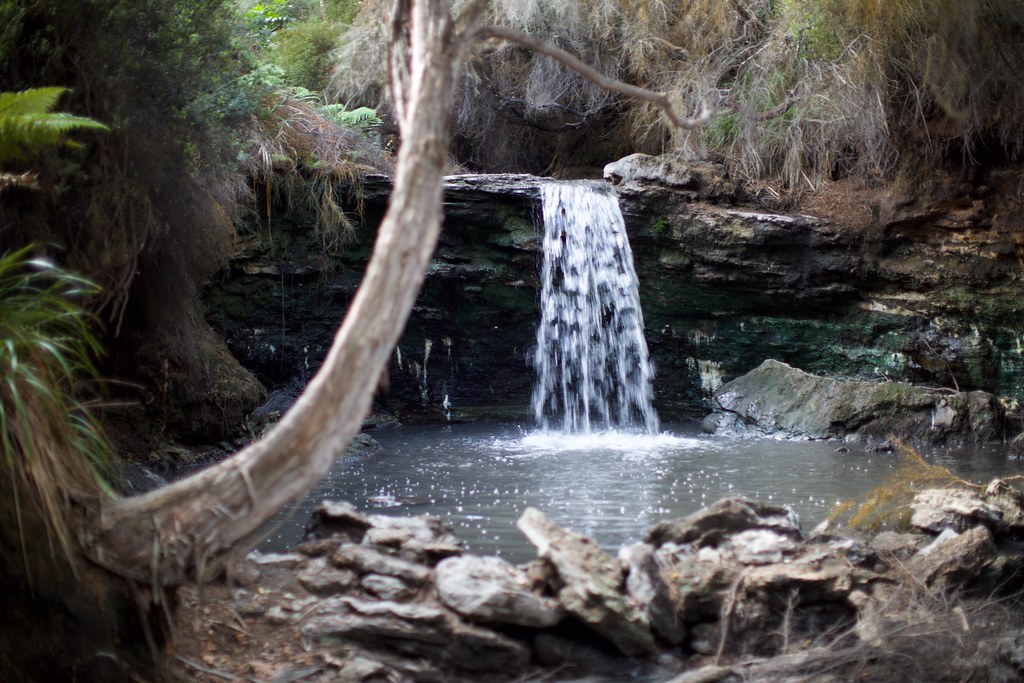
Of course, it wasn’t 10 minutes later that we found a path leading back into the woods, and went off-road again. This time the path led to an adorable little waterfall, and a very emphatic warning sign:
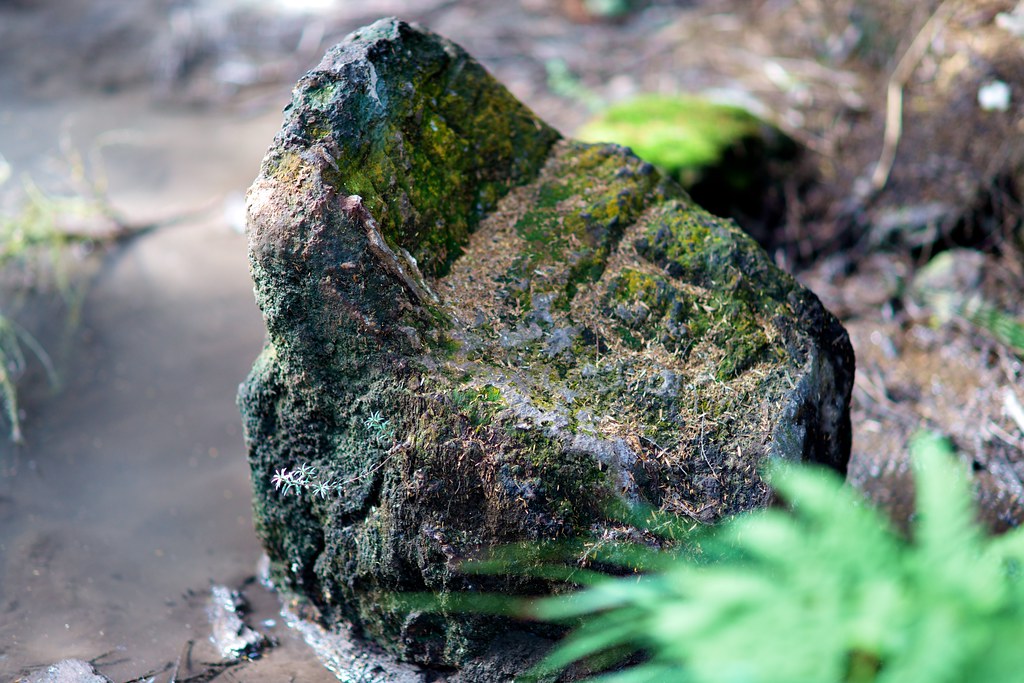
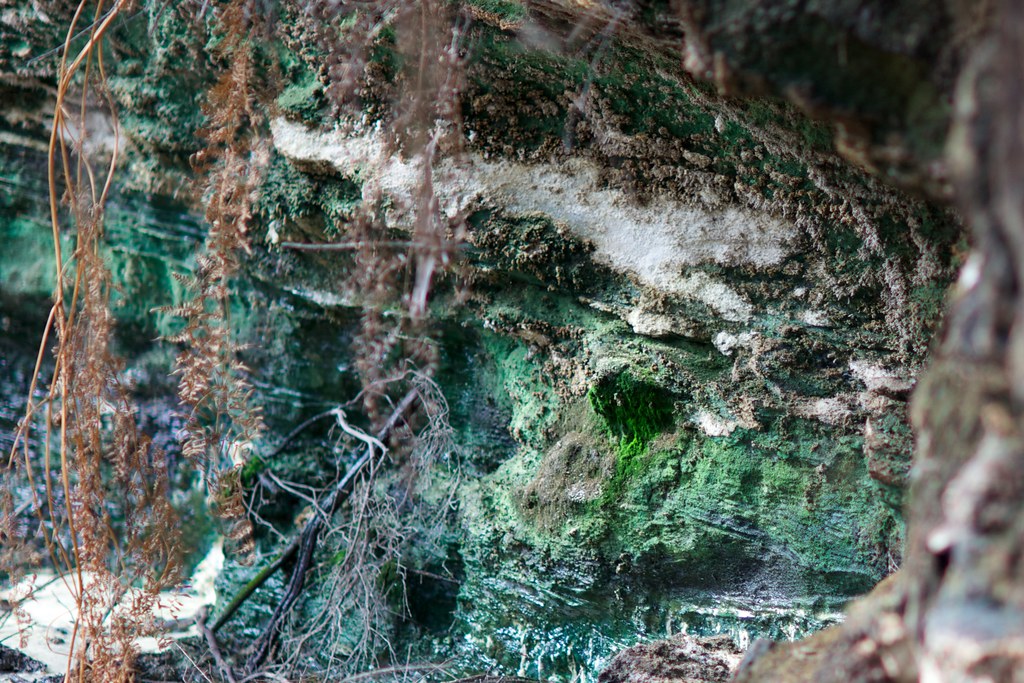
No problem, yo. Neither of us had swimming gear, and neither of us felt like swimming anyway. But we did take a bunch of pictures. Later on at home I was struck by the suspicious resemblance to Patrick O’Hearn’s “So Flows The Current” album cover. Gotta be a coincidence.
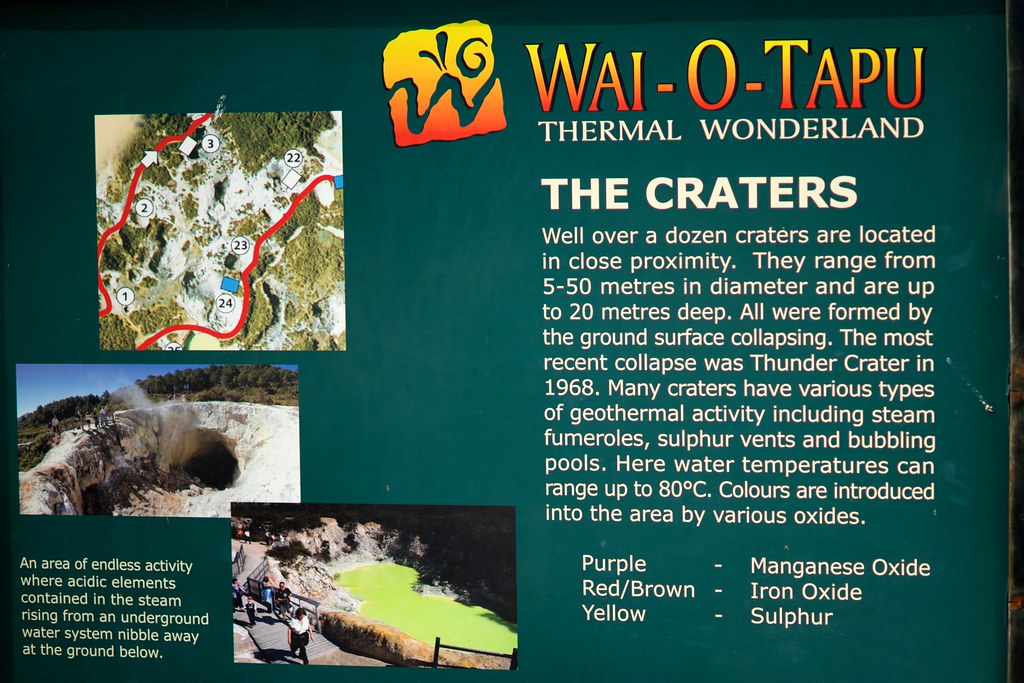
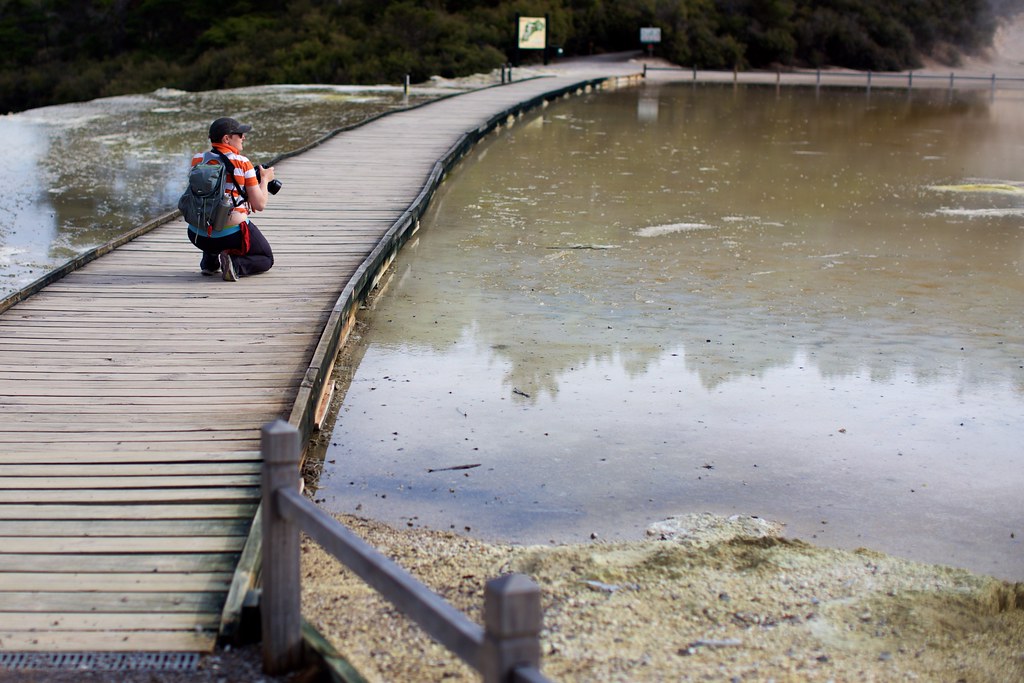
You might think we’d seen enough for one day, but there was still plenty more to go, for a little farther down the road we entered the official Waiotapu Thermal Wonderland area!
This is a formation called The Devil’s Snotty Nasal Regions.
Okay, I made that up.
Okay, I made that one up.
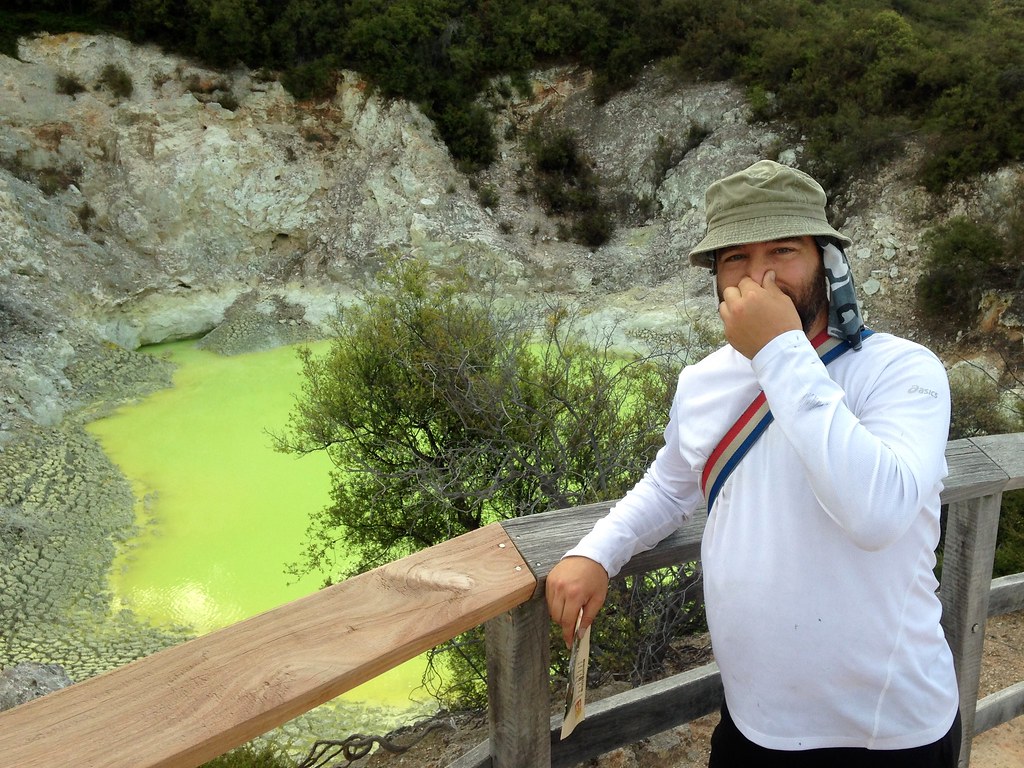
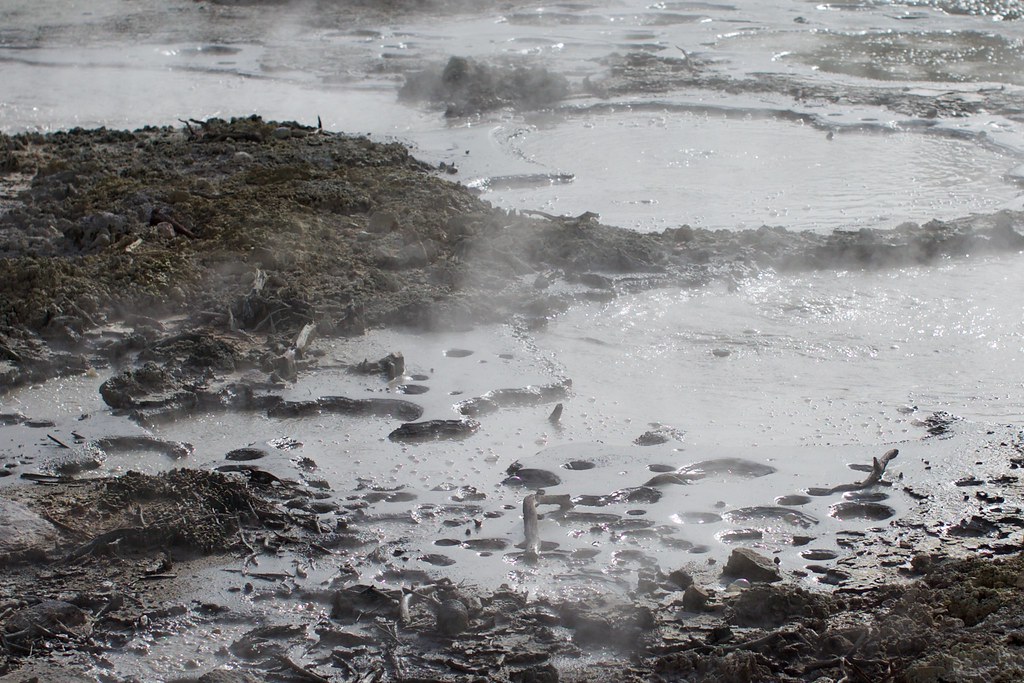
In addition to colorful, things around here are also burning hot, and sometimes there is almost no way to tell the difference between a harmless bubbling stream that you could stick your fingers in, and a seething cauldron that would immediately turn your fingers into cooked sausages.
I like to think that the sign in this picture comes with a little caption, reading, “don’t stick your hand over a gushing vent that’s 100 degrees Celsius you complete moron.”
The sign says “Don’t stick your hand over the gushing vents, they’re 100 degrees Celsius, you morons.”
The sign says “Don’t stick your hand over the gushing vents, they’re 100 degrees Celsius, you morons.”
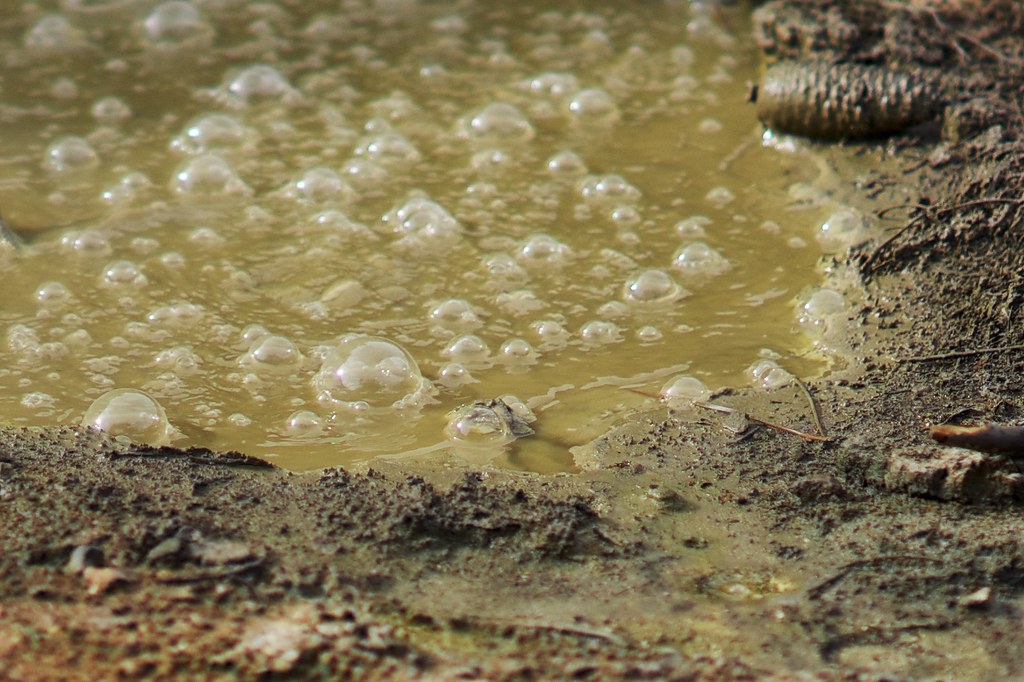
Here’s a smaller region from the previous photo. Now look at that and tell me: Is it room-temperature? Are those bubbles from some kind of additive in the water, or are they from recent boiling, or both? Wanna step in there and find out?
Since there’s a bit of mystery about what’s what, there are many appropriate captions for these little signs:
These signs are good, but there should be more of them.
“Do not cook your eggs in here.”
“Do not do your laundry in here.”
“This is not a pet bathing zone.”
“Do not throw tennis balls in here.”
“Not suitable as soup, no matter how many onions you dump in.”
“Standing here will not conceal your lack of deodorant.”
“The second-degree burns are not worth the facebook photo.”
“There is no P in our Sulhur Sring. Let’s keep it that way.”
“Do not cook your eggs in here.”
“Do not do your laundry in here.”
“This is not a pet bathing zone.”
“Do not throw tennis balls in here.”
“No matter how many onions you drop in, this will not become soup.”
“Standing here will not conceal your lack of deodorant.”
“The second-degree burns are not worth the facebook post.”
“There is no P in our Sulhur Sring. Let’s keep it that way.”
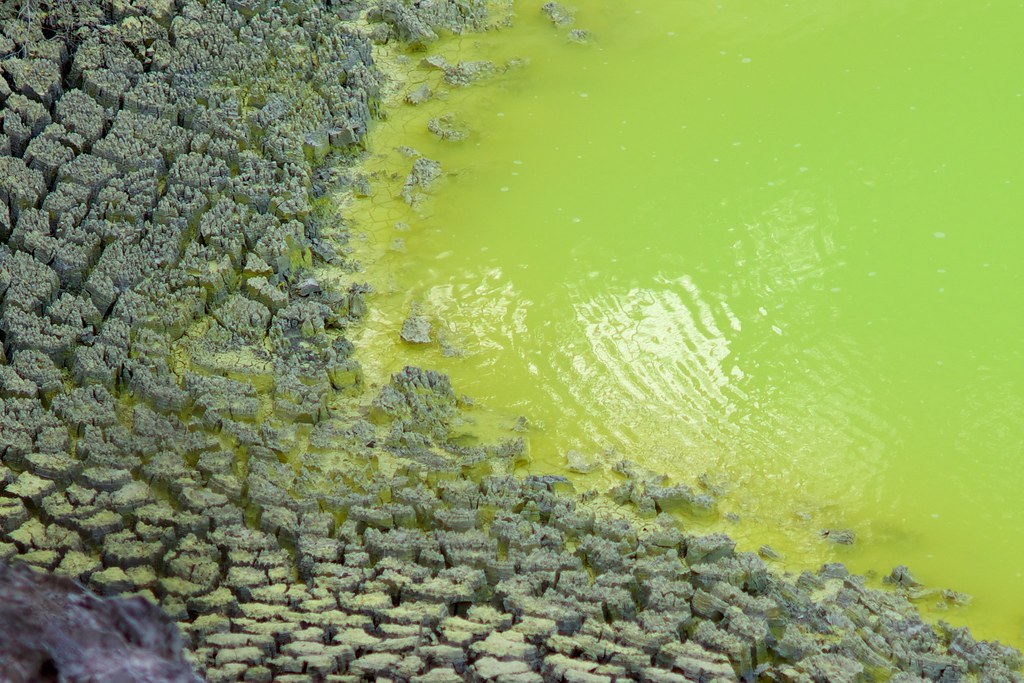
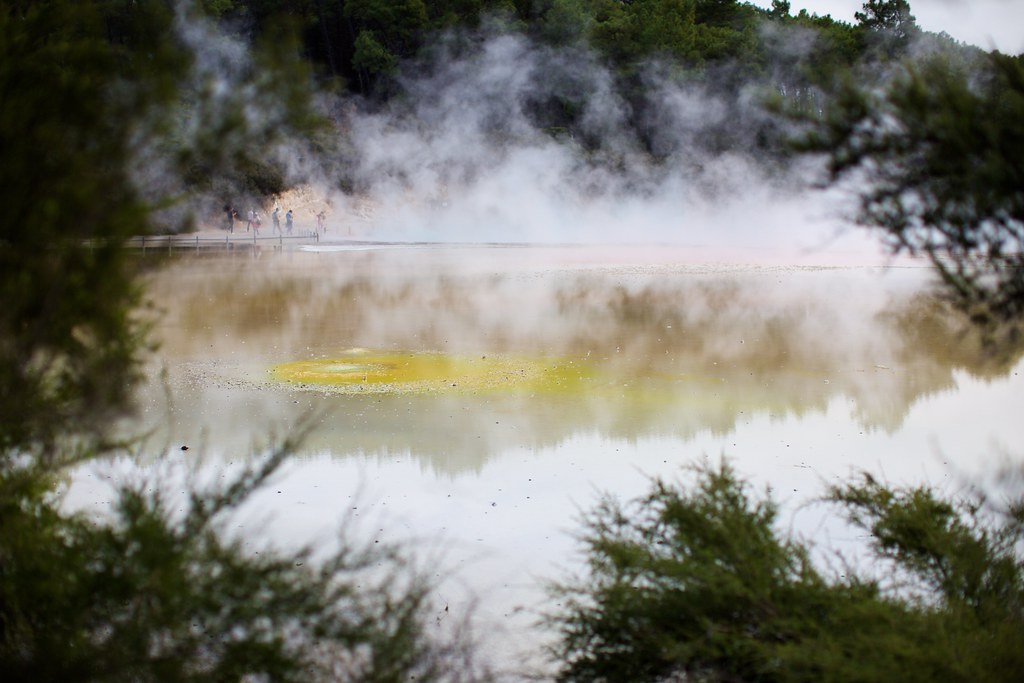
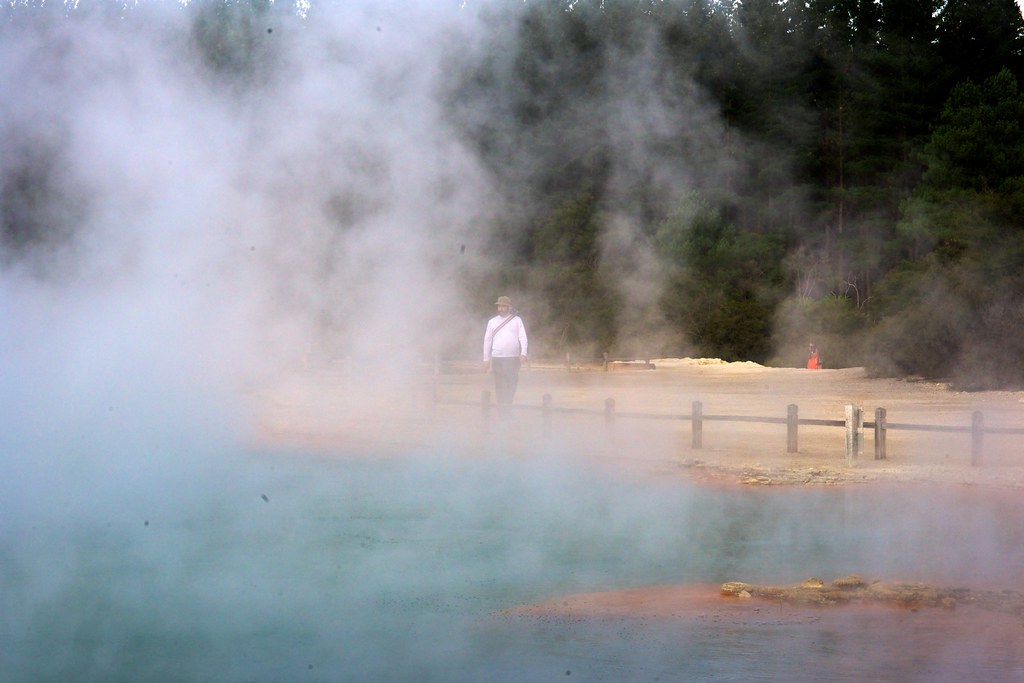
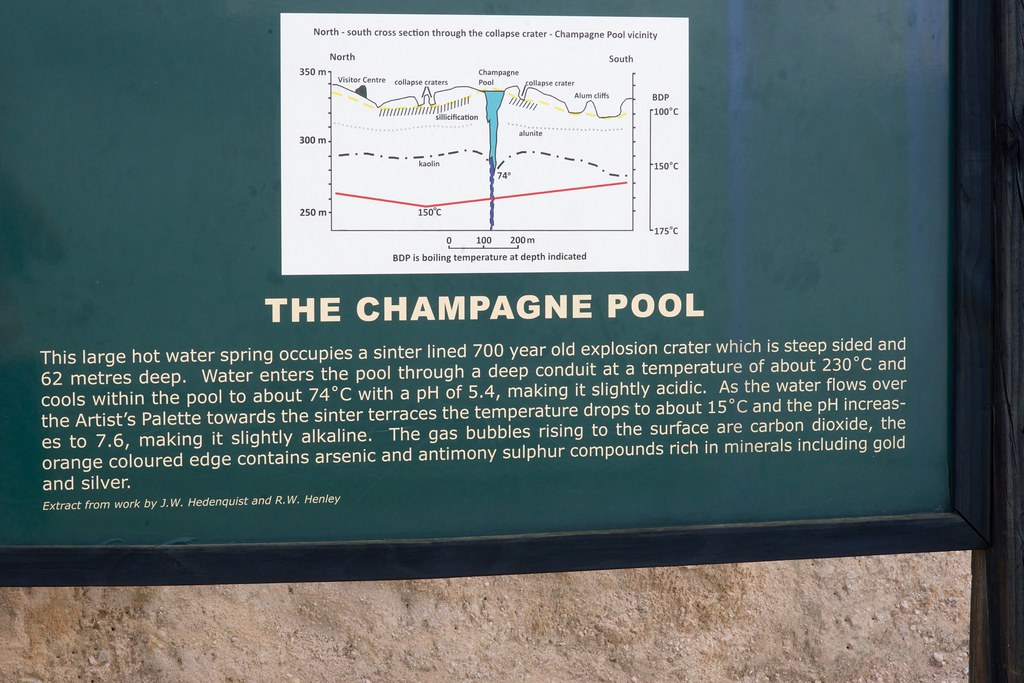
The most visually impressive formation was Champagne Pool, and the overflow area surrounding it.
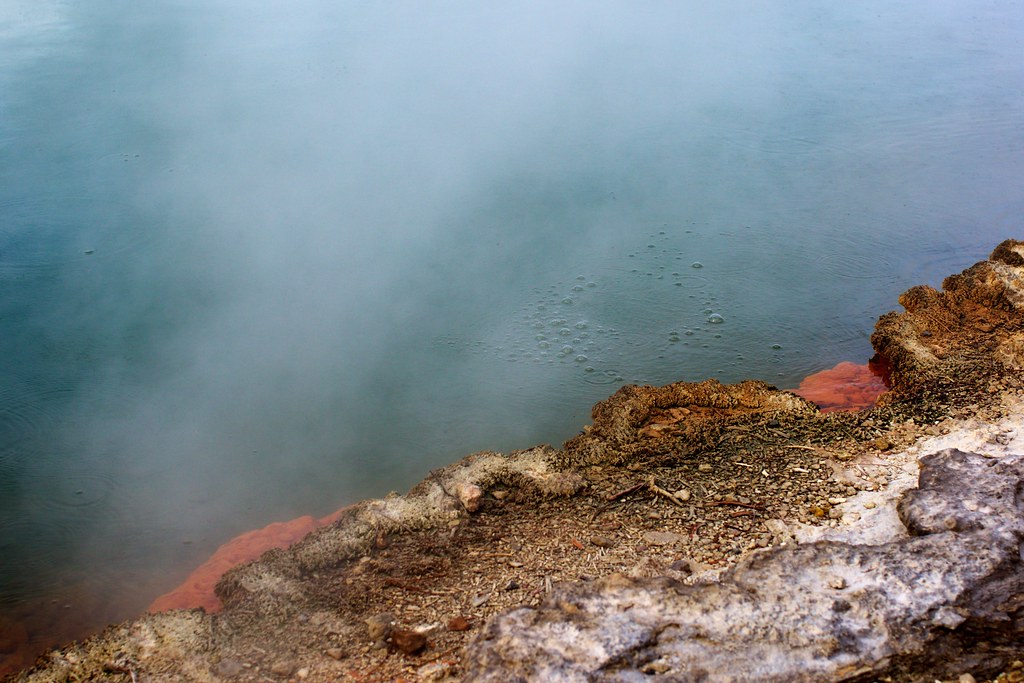
It looks inviting like a warm bath, but you really really shouldn’t go swimming:
The tiny bubbles are why it’s called Champagne Pool
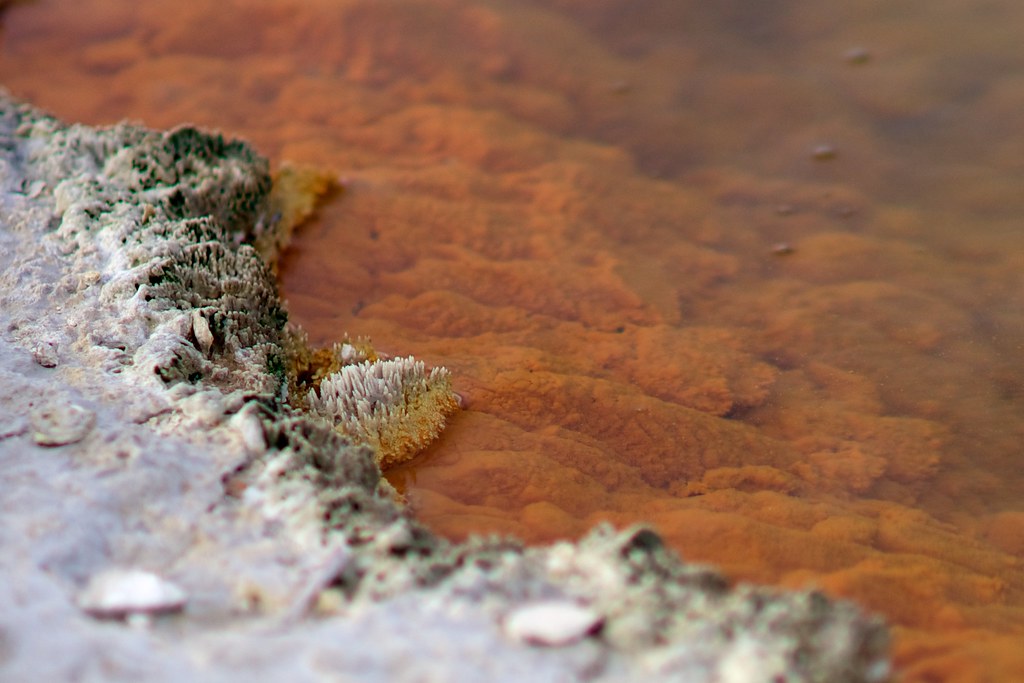
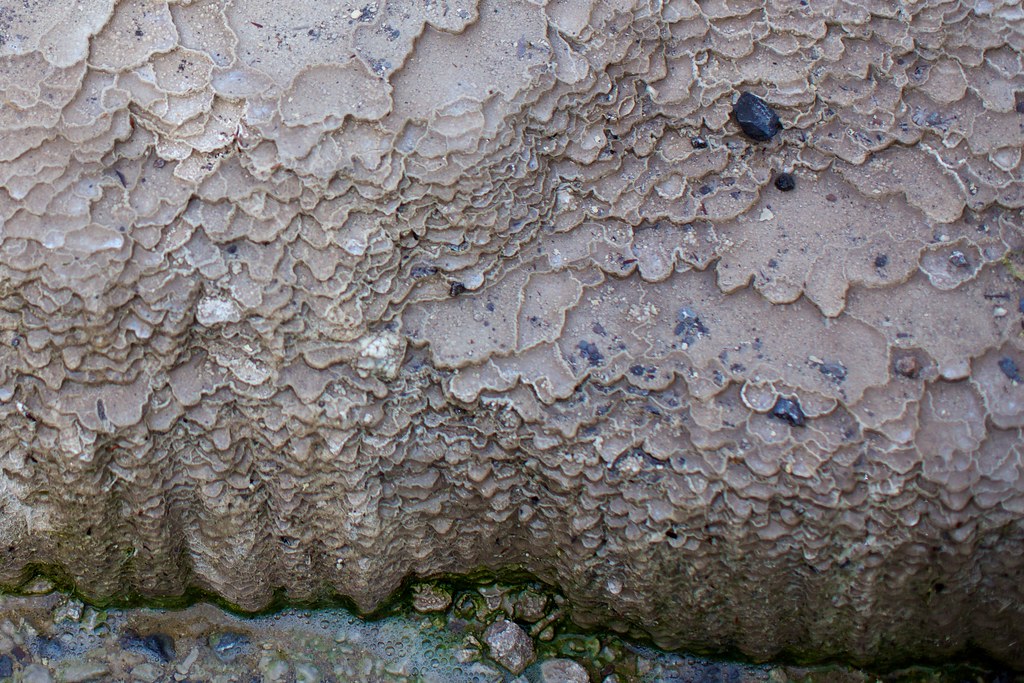
And here’s a close-up of the tafoni-like formations made by the acidic, mineral-rich water trickling down from Champagne Pool, over the mound of sandy rock nearby.
I’m not a geologist, but my current theory is that these form because the acidic water dissolves the material holding the grains together, and when grains come loose they are pushed along by the flow until they accumulate into a barrier, and the barrier is heated by sunlight causing just a little bit of evaporation on the downhill side of the barrier, causing the saturated solution to deposit some of its anchoring material in place, cementing the barrier and making a pool. Then, further flow of acidic water into the pool causes it to deepen, as more anchoring material is dissolved and carried over the rim.
I imagine the physics simulation that would accurately predict this would have to be an extremely accurate one indeed…
An interesting project for future computer programmers, with their much much more powerful future computing platforms!
Besides, I’m too busy right now taking photographs of stuff and going “oooooo!”
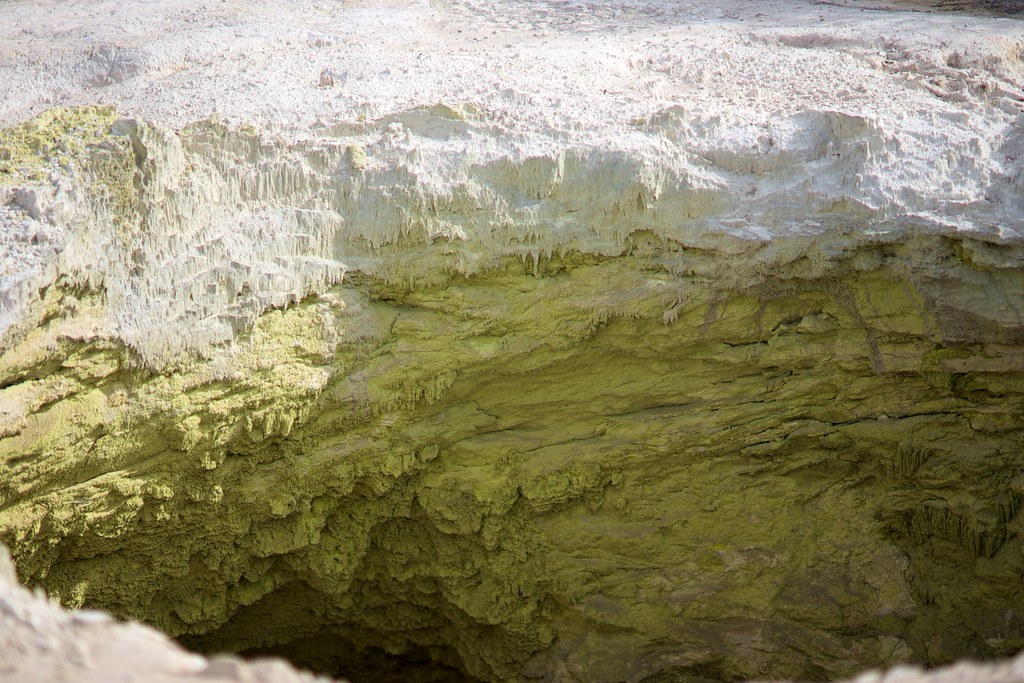
Photographs sometimes obscure the scale of things. This is an area about the size of a dining room … but it could also be a hundred square miles of weird geography on some far-flung alien planet in a Ridley Scott film! Woooeeeeeeoooooooo! *boop* *beep*
Photographs sometimes obscure the scale of things. This is an area about the size of a dining room … but it could also be a hundred square miles of weird geography on some far-flung alien planet in a Ridley Scott film! Woooeeeeeeoooooooo! *boop* *beep*
Photographs sometimes obscure the scale of things. This is an area about the size of a dining room … but it could also be a hundred square miles of weird geography on some far-flung alien planet in a Ridley Scott film! Woooeeeeeeoooooooo! *boop* *beep*
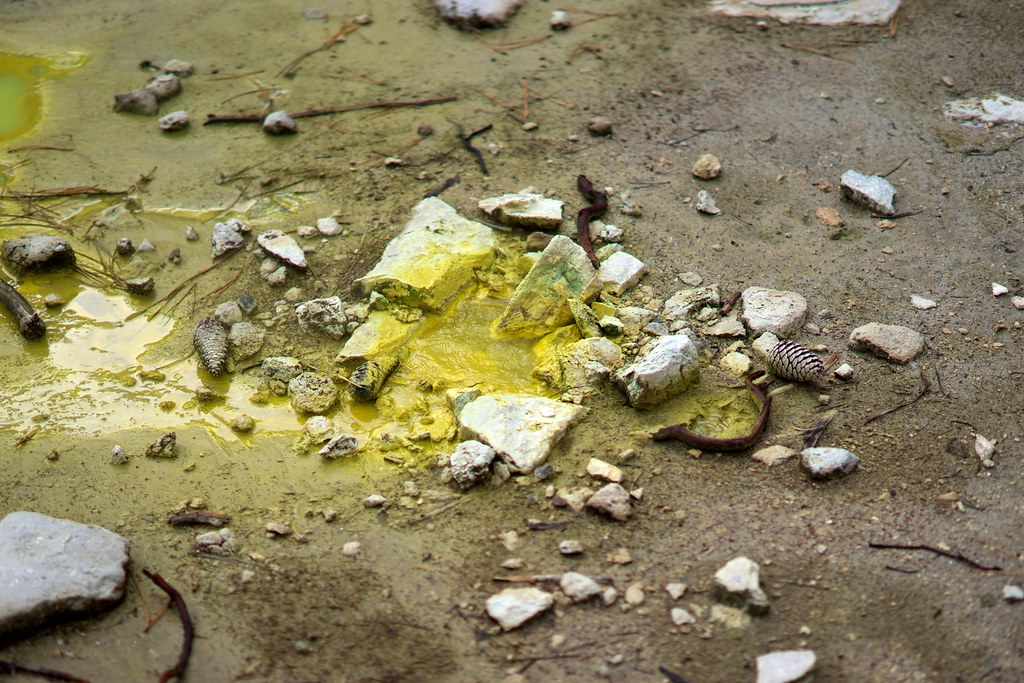
This looks like the activity of some rude barnyard animal, but it’s actually one of hundreds of sulfurous springs perforating the canyon floor. It’s too small to have an official name, so I’m naming it “The Devil’s Curry Accident”.
This looks like the activity of some rude barnyard animal, but it’s actually one of hundreds of sulfurous springs perforating the canyon floor.
This one’s too small to have an official name, so I’m naming it The Devil’s Curry Incident.
This looks like the activity of some rude barnyard animal, but it’s actually one of hundreds of sulfurous springs perforating the canyon floor.
This one’s too small to have an official name, so I’m naming it The Devil’s Curry Incident.
These two formations are called “The Devil’s Nutritional Yeast” and “The Devil’s Suspiciously Old Parmesan Cheese” I think.
This is called, like, the Devil’s Parmesan Cheese Collection, or something.
Pretty sure this spot is called The Devil’s Nutritional Yeast.
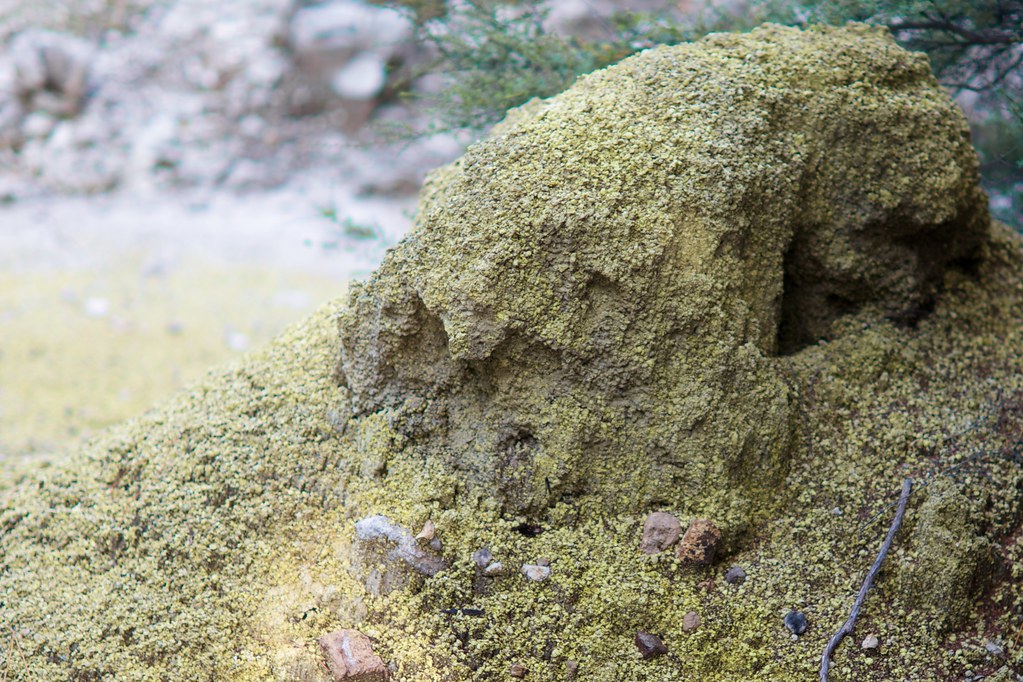
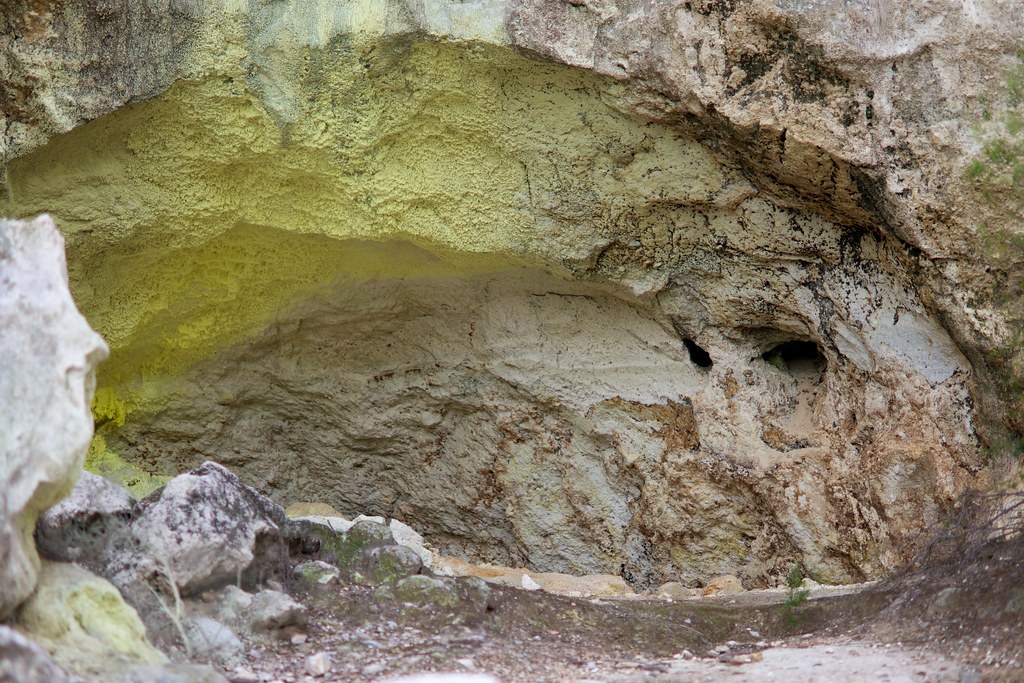
According to the park map, these are hills made of alum. Maybe I’m reading the map wrong, because to me it looks exactly like the chalk rocks I would dig out of the hills back home.
(Kerry’s comment: “Hah! It looks like a butt!!”)
According to the park map, these are hills made of alum. Maybe I’m reading the map wrong, because to me it looks exactly like the chalk rocks I would dig out of the hills back home.
Kerry’s comment: “Hah! It looks like a butt!!”
According to the park map, these are hills made of alum. Maybe I’m reading the map wrong, because to me it looks exactly like the chalk rocks I would dig out of the hills back home.
Kerry’s comment: “Hah! It looks like a butt!!”
True, very true! It was a day full of things that look like butts, or sound like butts, or smell like butts!
At the very edge of the official park walkway, we stopped to gaze out over Lake Ngakoro, and watch the sediment from the waterfall slowly mix with the more intense colors of the lake:
Time-lapse video of the sediment from the waterfall mixing into the lake.
After checking out, we rode down to a general store and bought a few snacks while people ogled our bikes. After so many years, I still actually like the attention that riding a recumbent attracts. Added eyeballs means added safety!
I scarfed some leftover thai food while Kerry was in the store, and answered a few polite questions. The number one question people ask is, “is that more comfortable than a regular bike?” To which my stock answer is, “pretty much all the time, yes, except when going over really bumpy roads because you can’t stand up on the pedals.”
Ten minutes later we were off, towards the south end of Rotorua, and a roadside attraction called Te Puia that linked up with a trail that runs alongside Highway 5. The first mile or so of the trail turned out to be an amazing off-road area designed for mountain bikes:
Dirt roads? I am enthusiastic! The new surface will make a nice change.
Exiting the awesome off-road first portion of today’s ride…
It was bumpy, but we totally rocked it. Afterward we hooked up with the regular trail, a nice cement lane following the highway. Smooth sailing for many miles with a slight uphill grade, taking us closer to the center of the island.
Just after our snack stop we noticed a fellow cyclist on the other side of the road, moving cautiously along in the almost nonexistent space between the hillside and the highway. We waved him over to chat, and recommended he use the separate lane we were using. He was on the seventh week of his trip, and started all the way down in Christchurch on the southern island. Wow!
A fellow explorer on week 7 of his trip, going the opposite way down to Rotorua.
He told us his name, but I’ve forgotten it. Drat!
A fellow explorer on week 7 of his trip, going the opposite way down to Rotorua.
He told us his name, but I’ve forgotten it. Drat!
Eventually the lane wandered away from Highway 5 and down a couple side roads, enveloping us in sunshine and the quiet noises of the countryside. We stopped for a few photos:
The bike path went even farther afield, through some wonderfully bumpy farmland. We were on a narrow track routed carefully between actively grazed fields, with cattle close enough on either side that we could reach out and poke them – if they didn’t dodge away so quickly. As long as we kept our bikes moving they seemed to ignore us, but if either of us stopped – and especially if we made eye contact with any of the animals – they would jerk out of their relaxed state and move hastily away.
We spent a while discussing whether the cows saw us as one large animal, or a human riding on some other animal, or just an incomprehensible monster made out of legs and struts and wire. There’s just no way to tell.
At this point Kerry asked me: “I’ve always wondered, why do hills have ridges on them like that? Is it something to do with the grass, or the rocks in the soil, or wind currents causing erosion?”
“Those are good guesses, but actually you’re looking at trails stomped into the soil by hundreds of grazing animals over decades of grazing. Four-legged critters don’t like standing uphill – or downhill – so they stand sideways. As they walk along they naturally make – and then follow – trails along the hills.”
We stopped here to take a photo of this bulldozed hillside, documenting just how thin the soil is in most of New Zealand, and a funny thing occurred to me. The little region of the Discworld in Terry Pratchett’s books, the one where Tiffany Aching lives, is called The Chalk by locals. Could Terry have been referring to New Zealand when he wrote about that region?
(On further thought, probably not. The most likely counterpart to The Chalk is Uffington, Oxfordshire in England.)
Continuing on into the hills… Mile after mile of gorgeous terrain, in gorgeous weather. It was can’t-miss photography: Anywhere you aim the lens, you get a great shot.
Our encounters with other cycle tourists have been pretty rare. Not a lot of people have the chutzpah to pedal in such hilly territory I guess. Or maybe they’re just impatient, or their time is too limited…
There are at least five different species of parasitic plant infesting this tree. Most of the leaves you see are from parasites. It is riddled with parasites! And yet, it survives.
It’s become impossible to tell where the original tree ends and where the parasite plants begin…
After a while we went downhill and passed by the Waimangu thermal attraction – the one with Frying Pan Lake – but the place was shutting down for the evening. So we parked for a while and ate snacks. We thought about coming back the next day but as soon as we saw how steep the outgoing road was, we decided against it. Cycling does have its limitations…
The hills continued to delight us. We had to stop and admire the view half a dozen times…
The wind picked up a bit as well. To give you an idea of how it felt, blowing gently through the grass and trees, I took this short video. Some day soon I think all pictures will be like this: Bracketed by a few seconds of video on either side to convey the mood.
The cycling route left the road, and went through a bunch of rough mountain-bike trail again, this time with thicker vegetation and more twists and turns. It was equally beautiful and challenging.
Quick video of Kerry rounding a curve on one of the dirt bike trails.
They trail eventually spit us back out by the highway, and after a few more miles of riding alongside it, we ended up at the Waiotapu Tavern.
We checked in, hurled our equipment into the tiny room, and walked over to the bar and ordered a massive pile of food. The place was empty except for us and we were too tired to chat, so we watched the television while we stuffed our faces.
The TV was tuned to some local New Zealand channel, showing a program about a home improvement competition between families. The family members were being made to run an obstacle course in order to win funding for their next project – a typical jumped-up reality show scenario.
They were moving big wheelbarrows of cement from one place to the next. One woman lost control of her wheelbarrow and face-planted, and her relatives all screamed and squealed in fear and rushed to her, and then the program cut to commercial and ended the episode. Through the next half-hour of local news and advertisements, they kept teasing the next episode by airing that sequence – of the woman face-planting and her family moaning in agony – over and over again, like it was the most exciting piece of programming they’d ever run in the history of New Zealand television.
After the tenth or eleventh time of hearing “Ugh – THUD! Waahh, oh no, waaah eeerrrrgggh boo hoo!” I got up and unplugged the television … but the joke was on me because the audio was playing through a restaurant-wide stereo system, and kept going even with the television disabled. I tracked down the barkeep and had a word with him, and he got the whole thing shut off.
The bedroom wasn’t just tiny, it was microscopic – barely enough room for the bed and our bikes, with nothing else in it – and it had one large window with a metal grille in front of it to prevent thievery, and trap us thoroughly inside in the event of a fire. The window faced straight out to the highway, but we were compelled to keep it open because it was the only way to circulate air.
All night long, trucks went barreling down the highway. If we shut the window the room would heat up and stink in less than an hour. We didn’t get very good sleep, but it didn’t mess with our mood too much: We’d just had another amazing epic New Zealand day!
Today we got another early-morning call with bad news. No dolphin snorkeling activity for us – the sea was still too choppy. Kerry and I decided that Whakatane was bad luck, so we checked out a day early and shoved our bicycles into a bus, and rode it back up to the lovely lakeside city of Rotorua.
The highway seemed even more twisty on this return trip, and we both got upset stomachs. It was early afternoon when we arrived in Rotorua, and instead of setting out immediately on the bike path towards Waiotapu, we decided to use our extra day to recuperate a little more and get an earlier start the next morning.
Most of the hotels in Rotorua were booked solid, and most of the rest had very high prices. Eventually we found one that was affordable and only a little bit crusty, and we flopped onto the bed and napped until our stomachs felt better. The discomfort inspired us to go through our luggage again and prepare another box of gear that we could ship directly to New Plymouth, instead of hauling it around for another three weeks. We paid for shipping online and left the box with the hotel receptionist, who promised to hand it to the carrier when they came by the next day.
I’ve been thinking lately: Travel is often romanticized and overrated, especially when it’s the kind of travel that’s packaged and sold to the middle class – and the aspiring middle class. For a while now I’ve been lucky enough to consider myself middle class, and one of the reasons I know this is, I have become a target for these romanticized, packaged experiences.
In the case of New Zealand, the package is obvious to me. It’s, “come wander through a working model of Middle Earth! You’ll dance with Hobbits, swing swords at orcs, and cast Magic Missile at the darkness!” Well, I could try and pursue that. I could completely embrace that vision – that product – and come to New Zealand intent on finding it. If I went with what the travel agents recommend, it would go like this:
Drop several thousand dollars on a helicopter ride into the mountains, then stand around for a few minutes in front of a rock formation that looks vaguely like the background plate for the city of Minas Tirith – except there’s no city there, obviously. Then fly another helicopter to a meandering spot on the Mangawhero River, the backdrop for (and I quote) “the dramatic scenes of Gollum catching a fish.” Then drive a few miles into a farmer’s back yard, to a hill that, if you squint, kind of looks like Fort Edoras in Rohan – if you scraped off the actual fort. And look! Here’s a hill that looks like Weathertop, if you squint and imagine a Weathertop-shaped structure in its place!
What better way to destroy a fantasy world? Heh heh heh.
Oh, how I mock the packaged product; but I do need to cop to the fact that I wouldn’t be in New Zealand if it wasn’t for the Lord Of The Rings films drawing my attention to it. Even if I’m not imagining myself in the Mines of Moria whenever I wander into a cave (like I did in Kentucky), I have still obviously been influenced by Peter Jackson’s adoration for his native country, and our common roots of fantasy literature.
Kerry has been to India quite a few times. She has many stories to tell, and they thoroughly clash with the “product” of tourism in India. In India’s case I think it would be fair to call that product the “Eat Pray Love experience”. It goes, “be like Julia Roberts! Reject middle-class decadence by burning thousands of dollars in jet fuel to flirt with exotic men! Oh, and there’s yoga, so it’s totally legit.” I wonder how many people see the movie, or something like it, or perhaps any one of a zillion Bollywood films, then go to India … and it’s beautiful and exotic, but it’s also packed with constant harassment, heartbreaking poverty, chaos, inconvenience, and filth.
Of course, the “product” is not born of India, but more from a negative sketch of what’s missing back home. And the same is true for the fantasy sketch of New Zealand. Even if we know they’re fake, such things can have a perverse and lingering attraction anyway. I just burned thousands of dollars in jet fuel to ride a bicycle in an exotic location, and is there anything meaningful I’m chasing in it? Probably not. It’s not for charity, it’s not for self-discovery… I’m not running from a past trauma… I’m not even doing yoga! (Just some fake Tai-Chi!)
So, I can’t shake the feeling that despite my high-mindedness, I am guilty of chasing the equivalent of the “Eat Pray Love experience” for geeks. I haven’t thought much about the Lord Of The Rings films, except during the tour of Hobbiton – kind of hard to avoid, when you’re walking around inside the Green Dragon Inn – but nevertheless I am mimicking the films in my own way, pursuing my own version of that product. I’m on a fairly self-contained journey (bicycling) through fresh air and nature (New Zealand), avoiding deadly beasts (cars) and exploring old ruins (Limestone Island) while casting Magic Missile (taking pictures)… A great antidote for my day-to-day job, which takes place at a desk. Where does the prepackaged fantasy world end, and my own mundane vacation begin? Am I the same posh, blinkered middle-class traveler that I look down upon for buying the “packaged product” of New Zealand as Middle Earth?
Perhaps I am, with just a difference in degree.
The most appalling packaged travel I ever took part in was a three-day cruise to a little island off the coast of Florida, on one of those gigantic cruise ships. There’s a lot I could say about it, but I’ll just say, every corner of the ship was enthusiastically designed to make me – the traveler – feel USELESS, like a pet hamster trapped in a giant food bowl. All that comfort backfired and made me feel very uncomfortable.
Maybe that’s what the difference in degree is: Comfort level. Perhaps I demand some level of discomfort because it bestows some feeling of accomplishment, or worthiness. Something to set me apart from other people. Not for the impression it gives other people – I’m usually embarrassed at the attention I get when I mention my long bike tours, since I think it identifies me as crazy more than anything else – but for the impression it gives to myself. I seek something personal, in the dangerous roads, the harsh weather, the rough sleeping, the isolation. Enlightenment, on my own terms.
Well, it’s true: Sometimes the uncomfortable aspects of travel can be the most enlightening, if you give them enough time to work on you. For example, I think the desolation of the small, meth-addled towns I passed through when cycling across the US helped me re-assess what was really worth worrying about in my own life. Of course, that’s another thing that the middle class is vilified for: Traipsing through third-world countries and using poverty as a kind of framing device for their own trifling problems back home. I’ve seen plenty of scathing editorials drifting across Facebook, flouncing at “poverty fetishism”, accumulating truculent “likes” like ants on roadkill.
Well, haters gonna hate, and ain’ters gonna ain’t.
As an aside, I think it’s very interesting that the author of Eat Pray Love wrote a followup book, gathering material about the meaning of marriage, as a tactic to conquer her own fears about it after her bitter divorce. To me, this says that “Eat Pray Love” – and the travel and the farting around and the talk of spirituality – was the years-long phase where the author “got her sillies out” (as an ex of mine would say), and the follow-up book “Committed” is where the real work took place, back home in the ‘States, back in another stable arrangement. I haven’t read it, but perhaps she even admits to herself somewhere in those pages that she didn’t have to travel to Bali to meet a man worthy of her time, and could have just as probably found one within 10 square miles of her house. I’ve seen many divorced men my age spend a fortune on distant travel and exotic women to do the same thing: “Look how different my activities, environment, and social circle are now! That means I’m different too!”
Change is not the same as rehabilitation.
All-too-human, and not exactly a spiritual awakening. … Good thing too, because if a spiritual awakening cost that much money, it would be in very short supply!
Okay, enough seriousness. Onward, to the next day…